Рецензия на выставку «Неистовый конец».
ЦТИ «Фабрика» С 31.01.2026
Художники: Мария Арендт, Ольга Бабина, Ольга Божко, Алексей Веселовский, Эльдар Ганеев, Danil Danot, Илья Евдокимов, Анастасия Иванова, Дмитрий Каварга, Зак Кахадо, Глеб Косоруков, Максим Смиренномудренский, Сергей Чернов, Валерий Чтак, Лена Шарганова
Куратор: Михаил Сидлин


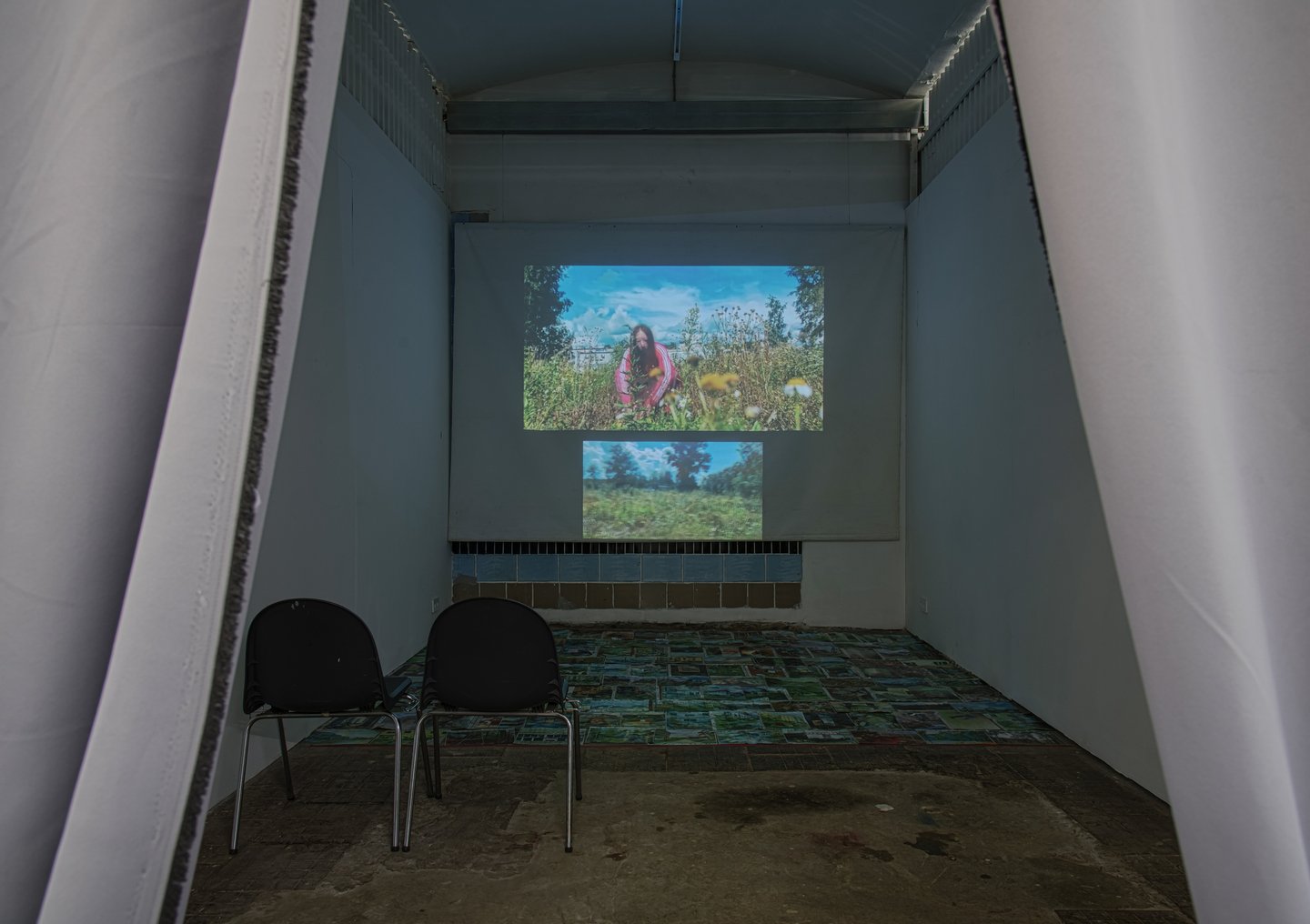


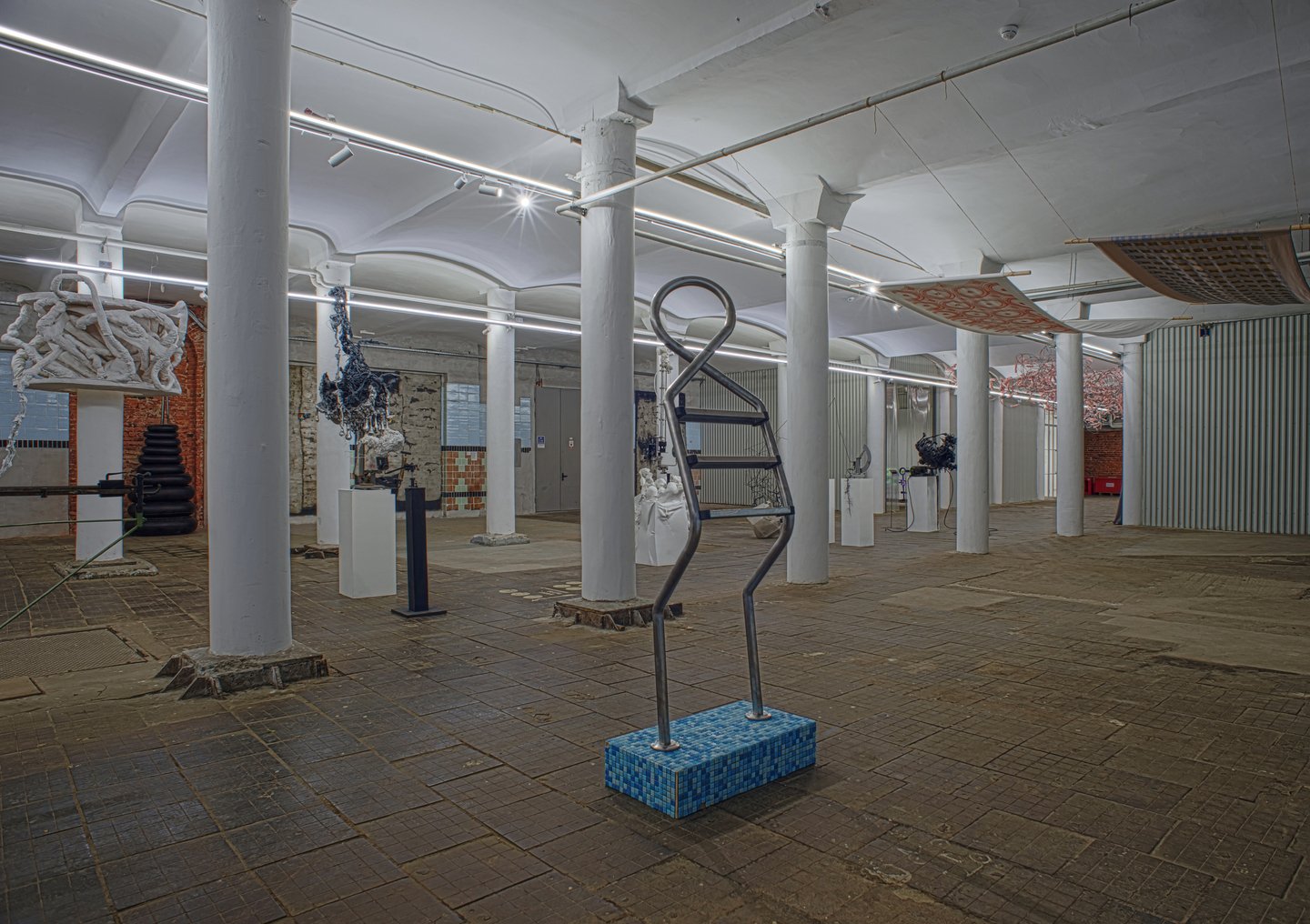


Виды экспозиции
©ЦТИ «Фабрика» (фото: Таня Сушенкова)
«Неистовый» — такую характеристику своеобразному «итогу» работы арт-кластера ЦТИ «Фабрика» дал куратор Михаил Сидлин. 31 января 2026 года на «Фабрике» открылась по-настоящему трогательная коллективная выставка — предварительное завершение истории одной из самых важных точек на культурной карте Москвы.
Как всем известно, Центр творческих индустрий «Фабрика», находящийся на территории бывшей фабрики технических бумаг «Октябрь», в 2005 году обрел статус арт-кластера. Он взрастил не одно поколение художников-визионеров, представил публике бесчисленные выставки, провел множество ярких мероприятий, познакомил москвичей с зарубежными авторами в контексте программы резиденций… ЦТИ «Фабрика» — островок свободы и жизни, оплот культуры, находящейся в экспоненциальном развитии.


Открытие выставки 31 января
©ЦТИ «Фабрика» (фото: Таня Сушенкова)
К сожалению, в 2026 году это историческое пространство в Басманном районе прекратит свое существование: площадь, как говорят определенные структуры, используется нерационально. Сейчас «Фабрика» готовится к переходу в иное бытие. Авторы выставки «Неистовый конец» вместе с куратором Михаилом Сидлиным размышляют о дихотомии индустриального-постиндустриального. С одной стороны, общество все еще осмысляет наследие промышленной эпохи, пытается ужиться с ее пережитками — это длительный, тянущийся десятилетиями процесс. И всё же время стремительно бежит, поэтому, как говорит куратор, «пришла пора расставаться с постиндустриальным».
Где сейчас современное общество? Оно зависло между утопическими воззрениями и мутным будущим. Между поэзией жизни, созиданием красоты, доблестной службой и прекарным трудом без всяких гарантий, развитием технологий и сферы услуг. Об этом состоянии остолбенения постиндустриального и говорит выставочный проект. Творческая команда берет за базис технологический контекст «Фабрики» (локальную историю), но идет дальше, расширяя хронологические и географические границы, составляя карту симптомов и болезней российского общества по его отношению к культуре и труду — формам моделирования деятельной жизни.

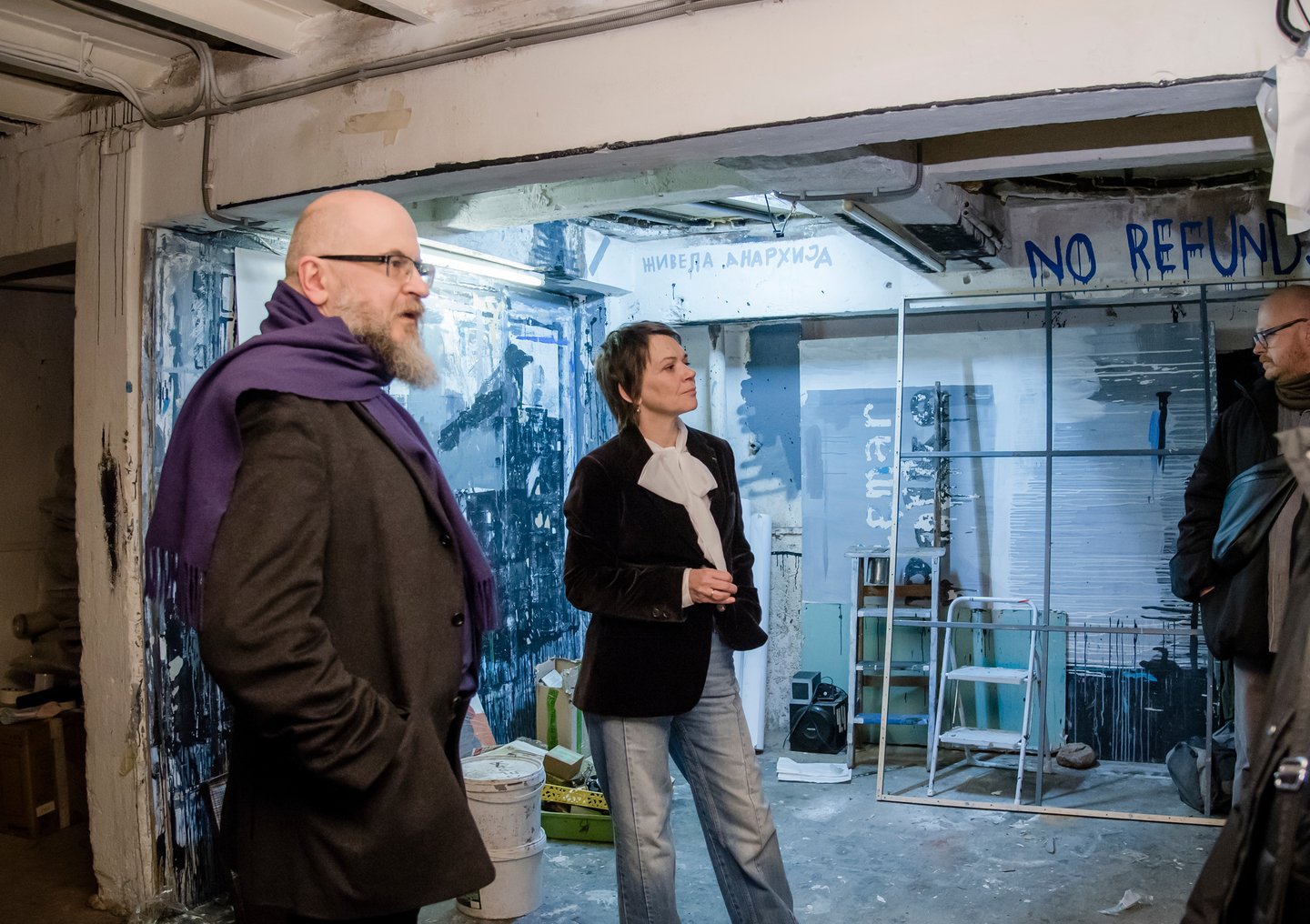
Экскурсия куратора Михаила Сидлина в мастерскую художника Валерия Чтака на «Фабрике»
©ЦТИ «Фабрика» (фото: Таня Сушенкова)
Площадкой для высказывания выступает почти всё пространство «Фабрики»: Цех отделки, этажи с лестничными пролетами, мастерская Валерия Чтака и даже таинственный чердак. На теле арт-кластера в последний раз возникают удивительные знаки и сообщения художников. «Фабрика» раскрывает свои неочевидные места, обнажает душу перед тем, как погибнуть и затем родиться вновь, но уже в другом обличье. Зритель выступает «археологом» и со-исследователем. Его задача — вместе с художниками пройти путь в самую глубь пространства и порефлексировать о конце нашей эпохи, о смене парадигм рукотворного и технологического.

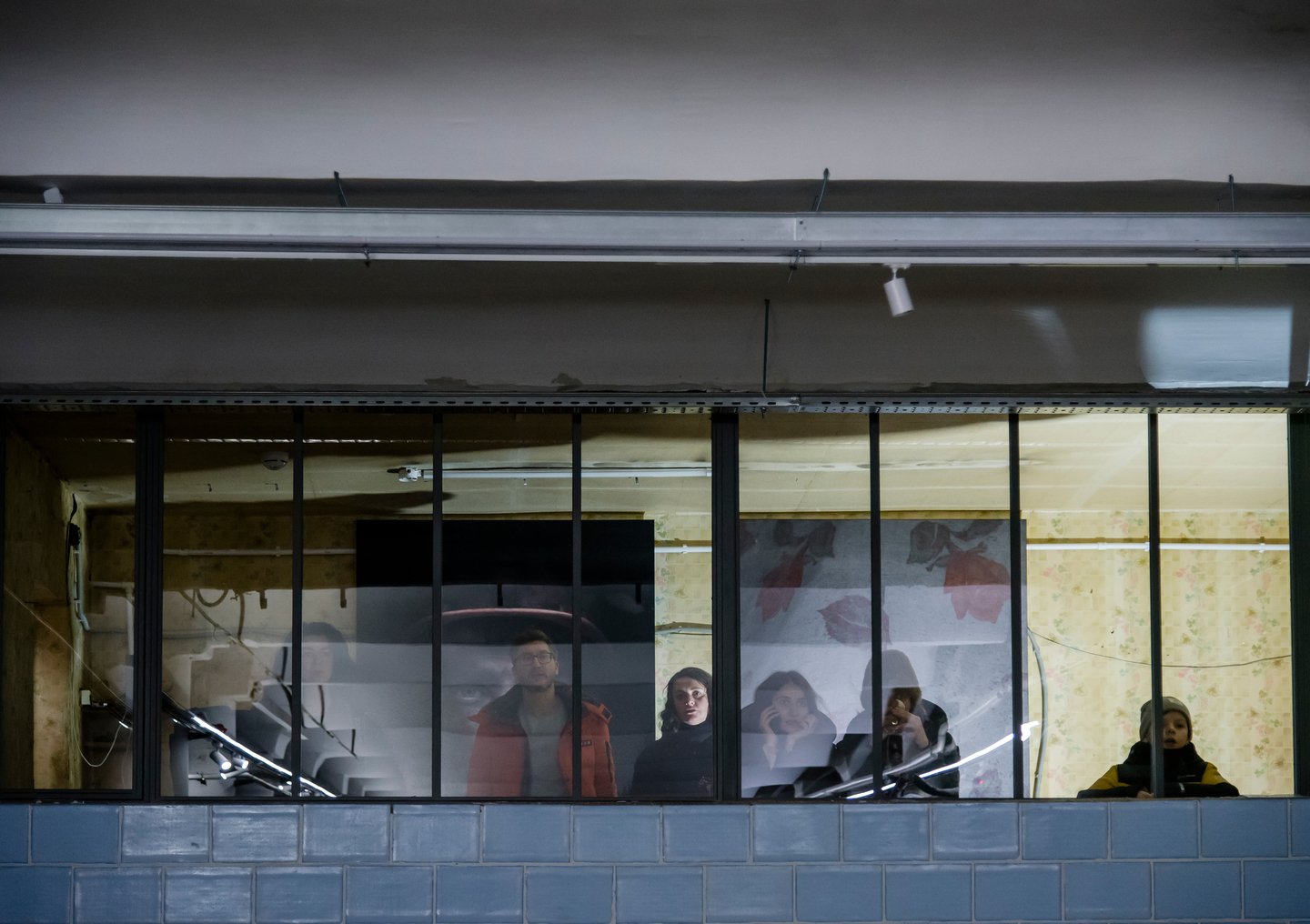
Изобр. 1: Зрители выставки в бывшей лифтёрской с фотографиями Глеба Косорукова / Изобр. 2: Работа Марии Арендт на лестничной площадке
©ЦТИ «Фабрика» (фото: Таня Сушенкова)
Как выстроена экспозиция? Куратор избегает строгой тематической раскладки произведений приглашенных авторов. Соседствующие на всей площади демонстрации экспонаты формируют особые концептуально-пластические «участки» или кластеры, в которых концентрируются собственные подтемы, задуманные Сидлиным. Так образуется множественность взглядов и позиций по отношению к центральному замыслу проекта. Тем не менее, чтобы систематизировать скрытые связи в единую линию, необходимо поделить произведения на всей выставке на чёткие тематические разделы. Послания «Неистового конца» становятся понятными лишь когда зритель ознакомился к экспозицией целиком. Связи между произведениями возникают сами, без видимых усилий. В самом начале осмотра, в пространстве Цеха отделки, зрителю предстоит собрать первые намеки на нарратив: здесь истории только начинают складываться.
Основываясь на первых очертаниях проекта, можно выделить его следующие опорные тематические разделы: аллегории надежды, труд как творчество, картография, опорные структуры, возвращение на родину, поэзия конца. Названия разделов — всего лишь вольная трактовка идейных сборок, формируемых произведениями.
Точка входа на выставку
©ЦТИ «Фабрика» (фото: Таня Сушенкова)
Тематический блок аллегорий надежды начинается в Цехе отделке и замыкается на лестничных пролетах «Фабрики». Показательная работа — «Лестница в небо» (2016–2025) Сергея Чернова. В его объекте громадный обелиск «Покорителям космоса» буквально прорастает сквозь толщу почвы и корней, словно приближая к реальности грёзы человека о познании Вселенной.
Дихотомия космического/земного переходит в дихотомию (без)опасности в разрастающейся по потолку Цеха (и других локаций «Фабрики») инсталляции Danil Danot «Цветущие ветки миндаля» (2026). Издалека вся эта система — колючая проволока, украшенная розовой монтажной пеной — напоминает растение с одноимённого полотна Ван Гога и отсылает к образу обновления и вечной красоты. Приблизившись, зритель замечает опасность, таящуюся в этой странной красоте. Розовая пена, увы, не может полностью обезоружить колючку и создаёт безмолвное, но драматическое напряжение. Красота действительно требует жертв?

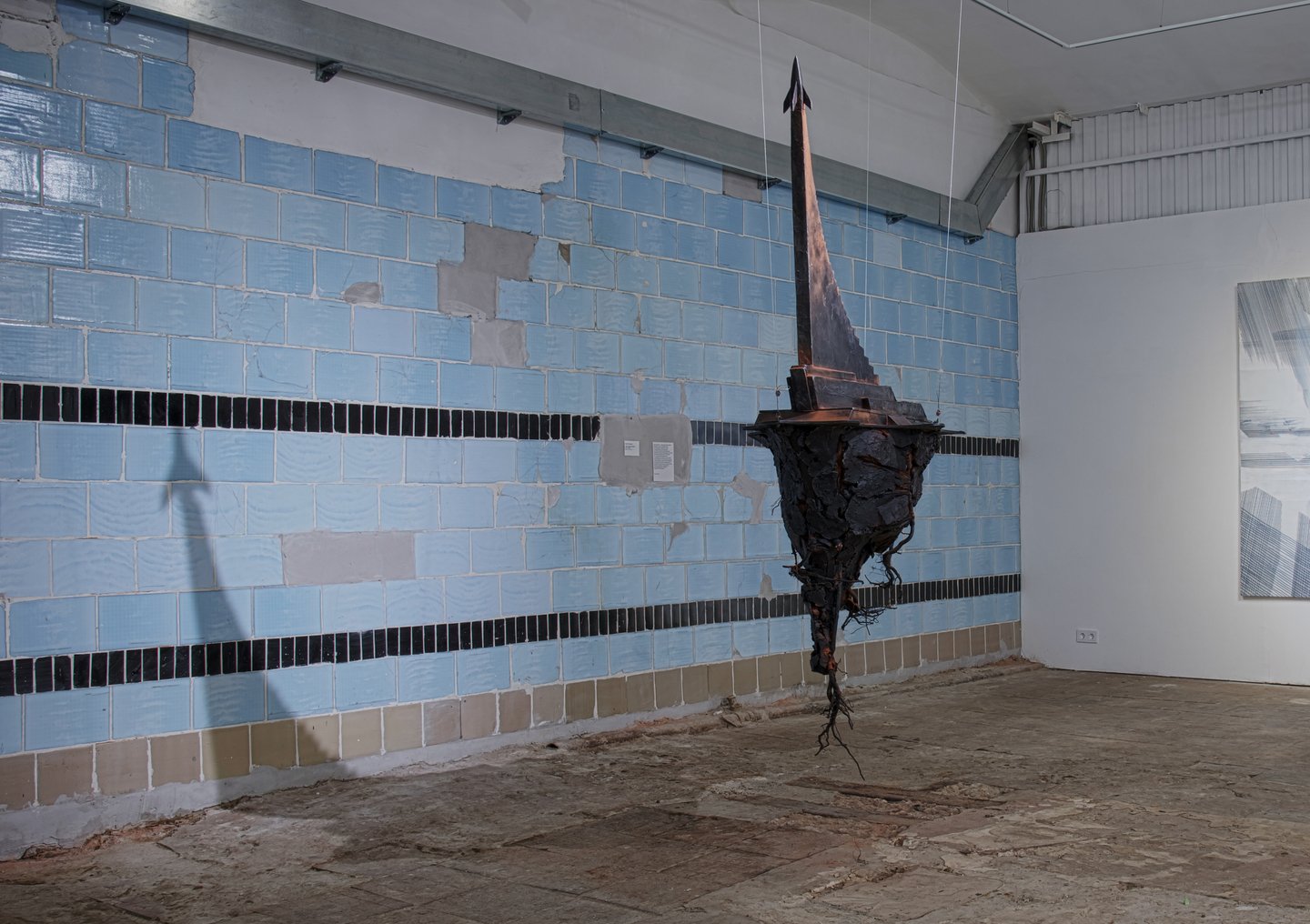
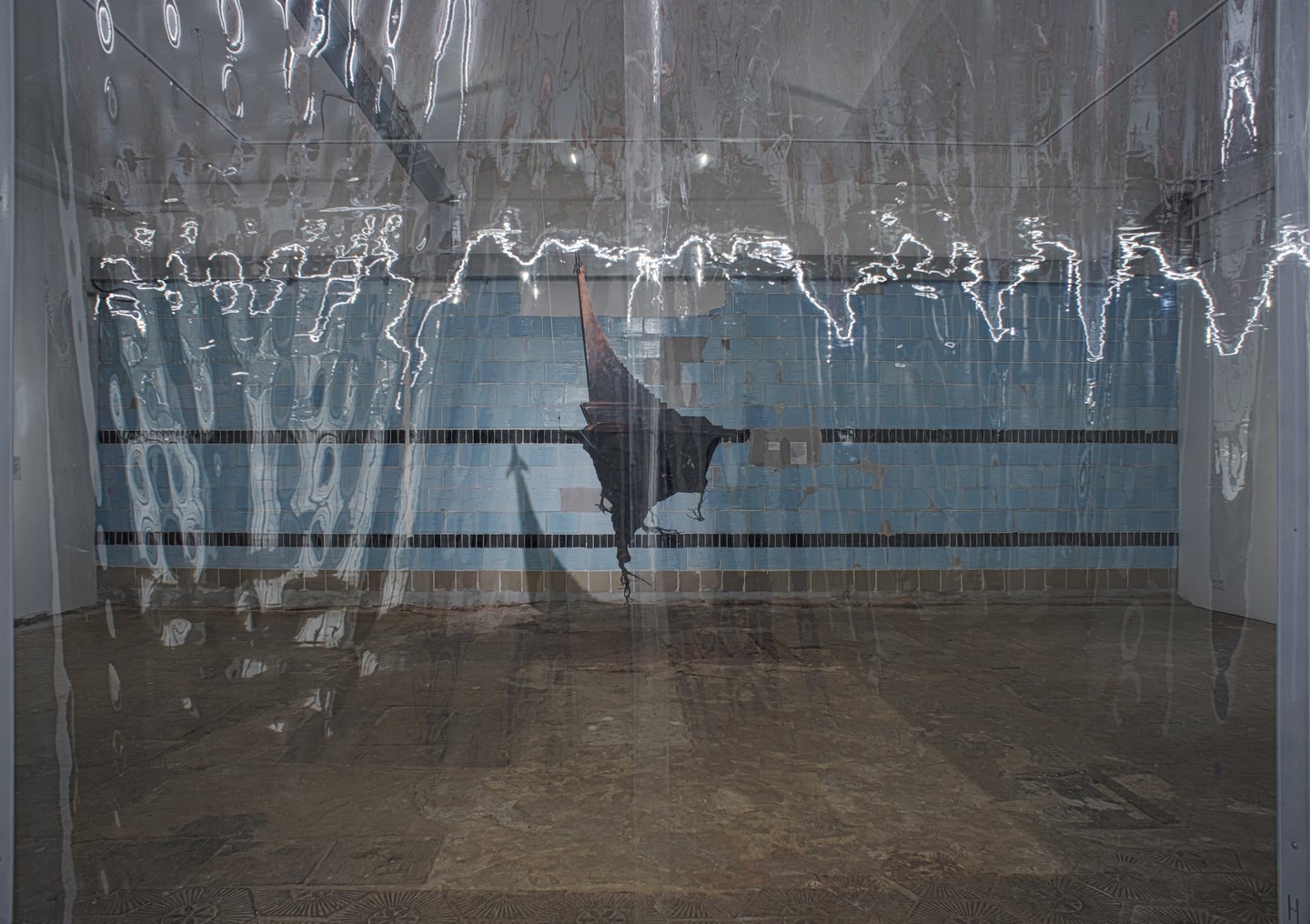

Изобр. 1–2: «Лестница в небо», 2016–2025. Дерево, металл, акрил / Изобр. 3–4: Danil Danot. «Цветущие ветки миндаля» (фрагменты), 2026. Смешанная техника
©ЦТИ «Фабрика» (фото: Таня Сушенкова)
Идея надежды продолжается в афоризмах и аффирмациях Ильи Евдокимова, а именно в серии портретов Льва Рубинштейна «Весна будет» (2026). Взяв за пластическую основу бессмертные фразы одного из основателей московского концептуализма, художник составляет его портреты из текстов, где главный лозунг обещает наступления весны. Портреты художника, сделанные на технических бумагах производства «Октября», можно заметить в простенках и переходах «Фабрики» — так концепция великих утопий и силы мечтания пронизывает пространство и время, воплощая невозможное.

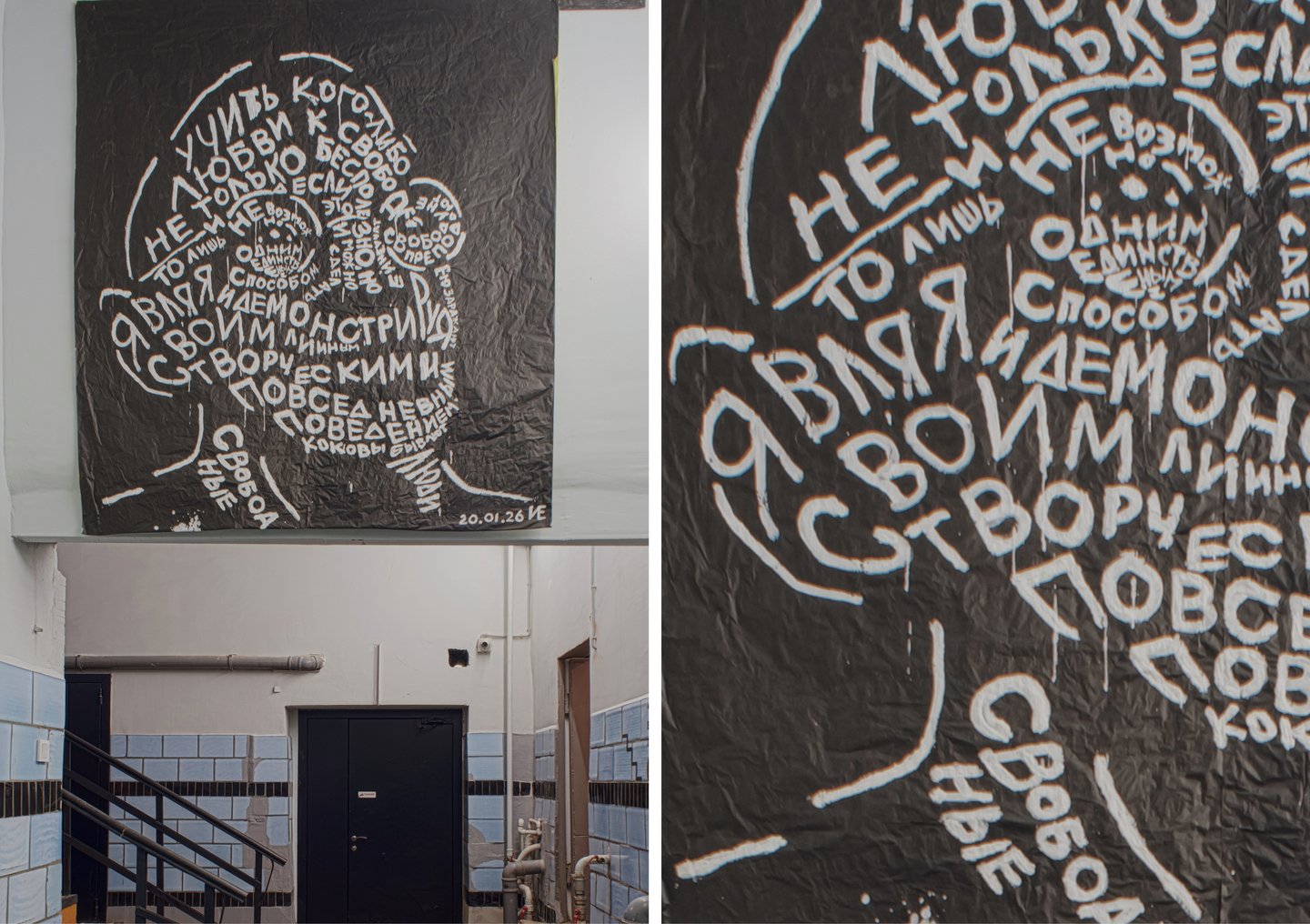

Илья Евдокимов. «Весна будет», 2026. Бумага фабрики технических бумаг «Октябрь», тушь
©ЦТИ «Фабрика» (фото: Таня Сушенкова)
О труде как жизнетворчестве и творческих машинах размышляют Дмитрий Каварга и Глеб Косоруков. Они поэтизируют производственную повседневность, обращаясь к вещам и людям. Проекты художников фиксируют хрупкость и ускользающую красоту того мира, из которого вышла «Фабрика». Работы Каварги и Косорукова размещены в просторной области Цеха отделки, которая с учетом колонн и лифтёрской очень напоминает интерьер католического храма: три нефа, подступ к алтарю и сам алтарь. В «центральном нефе» расположились замысловатые объекты-мутанты Дмитрия Каварги, созданные на основе реального предоставленного оборудования ФТП «Октябрь». Они проживают свои последние мгновения, в последний раз перерождаются, переходят из одного агрегатного состояния в другое.
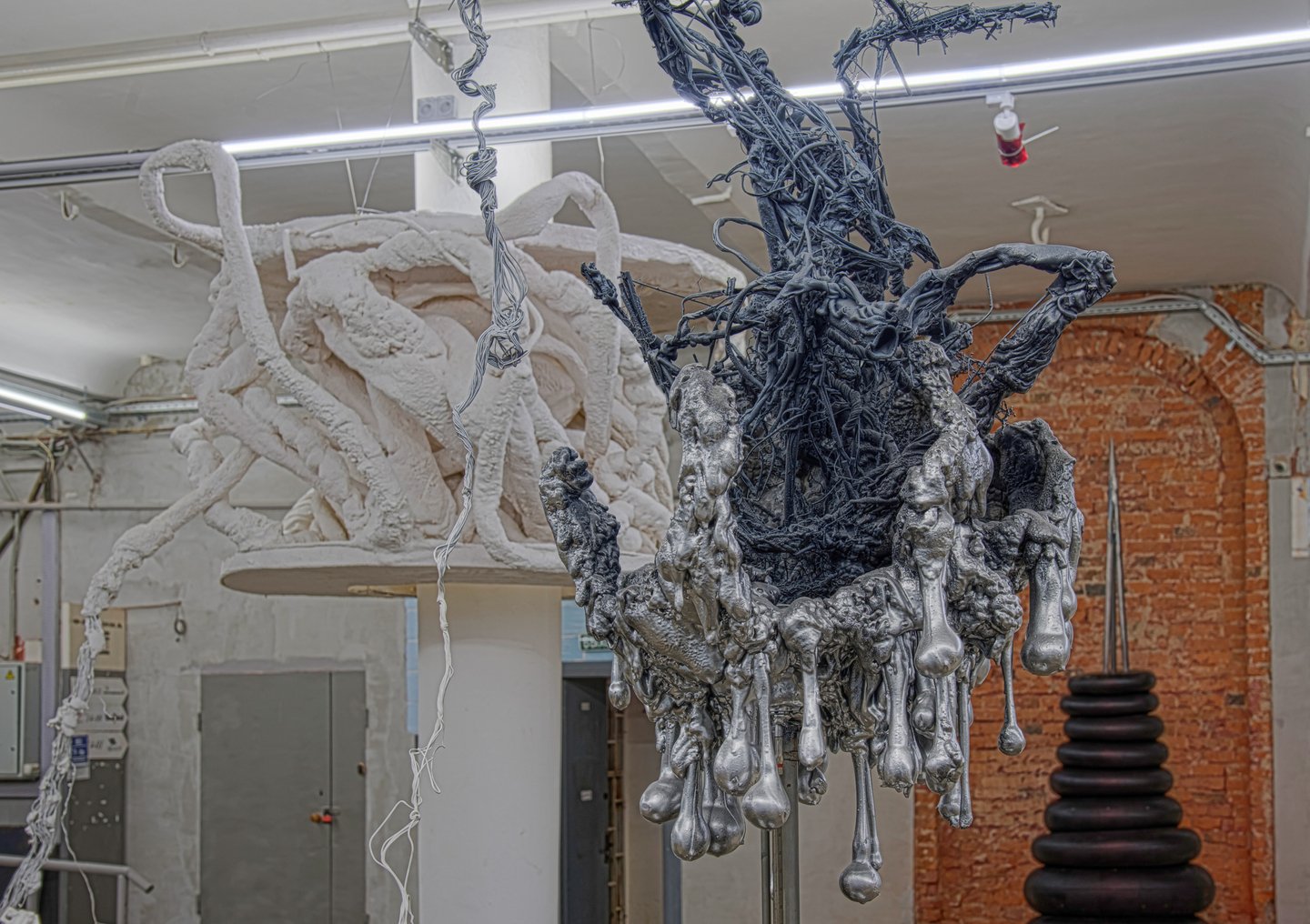


Дмитрий Каварга. Цикл объектов на основе оборудования, предоставленного сотрудниками ЦТИ «Фабрика», 2026. Смешанная техника
©ЦТИ «Фабрика» (фото: Таня Сушенкова)
В «алтаре» (на самом деле — бывшей лифтерской) расположились большие фотографии Косорукова из проекта «Шахта им. Стаханова, г. Красноармейск (Покровск)» (2009). Художник играет с эпохами: он «помещает» современных шахтеров в стахановский мир, находя сходства в архетипах рабочего класса, сохраняющего, как пишет Косоруков, «идентичность пролетариата».
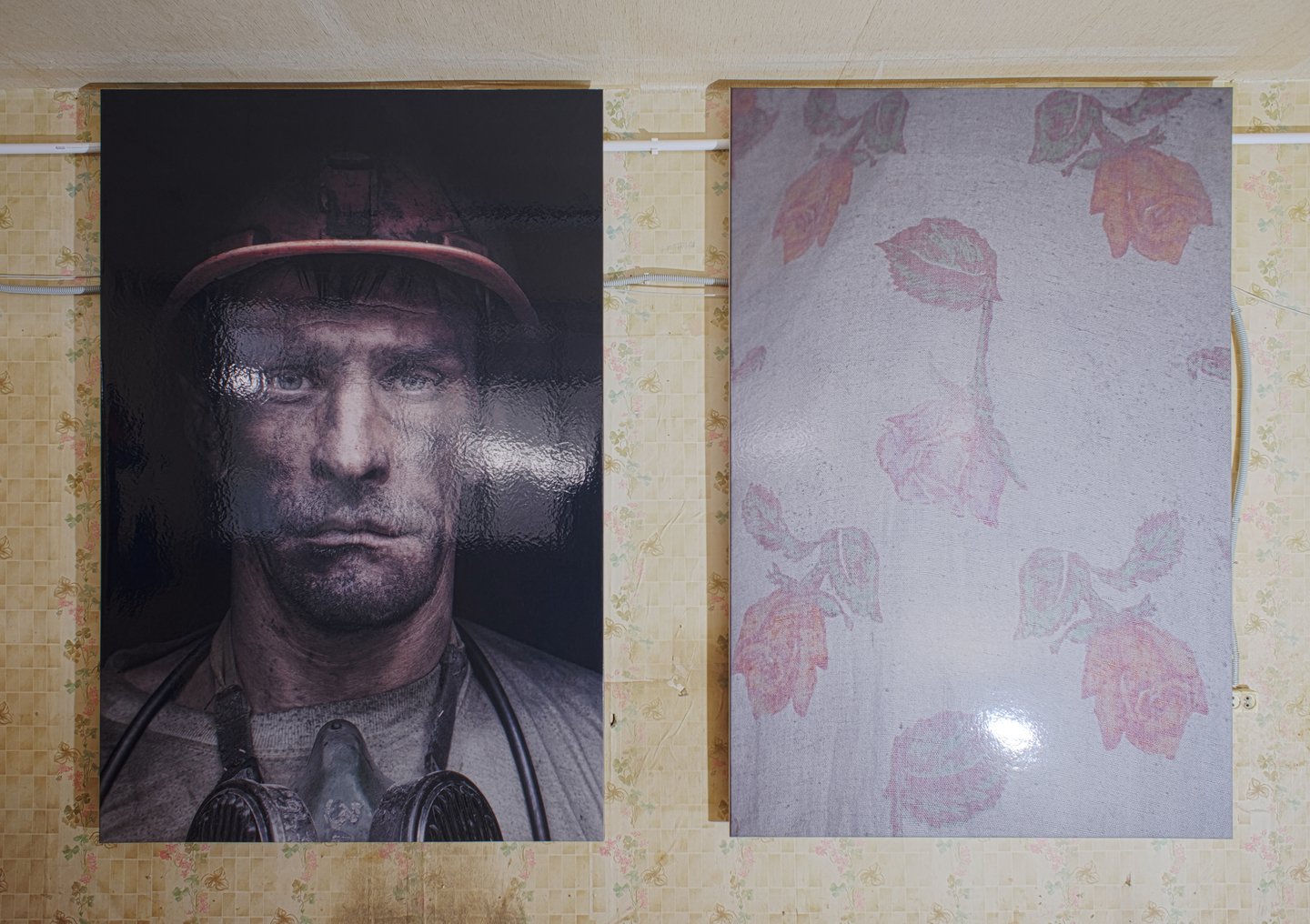


Глеб Косоруков. «Шахта им. Стаханова, г. Красноармейск (Покровск)», 2009. Искусственный нетканый материал, пигментная печать, акриловый лак
©ЦТИ «Фабрика» (фото: Таня Сушенкова)
Территориально ЦТИ «Фабрика» находится между станциями метро «Бауманская» и «Электрозаводская». Внутри этой границы формируется особый пространственный опыт. Ряд художников на выставке работает с локальным контекстом, внутри и среди которого находится ЦТИ. Под потолком Цеха отделки развешаны текстильные объекты Эльдара Ганеева из проекта «Метросвет» (2025). Переосмыслив орнаментальную роспись потолков станций «Бауманская» и «Электрозаводская», художник приглашает зрителя к неспешному созерцанию ритма узоров, заставляя запрокинуть голову.
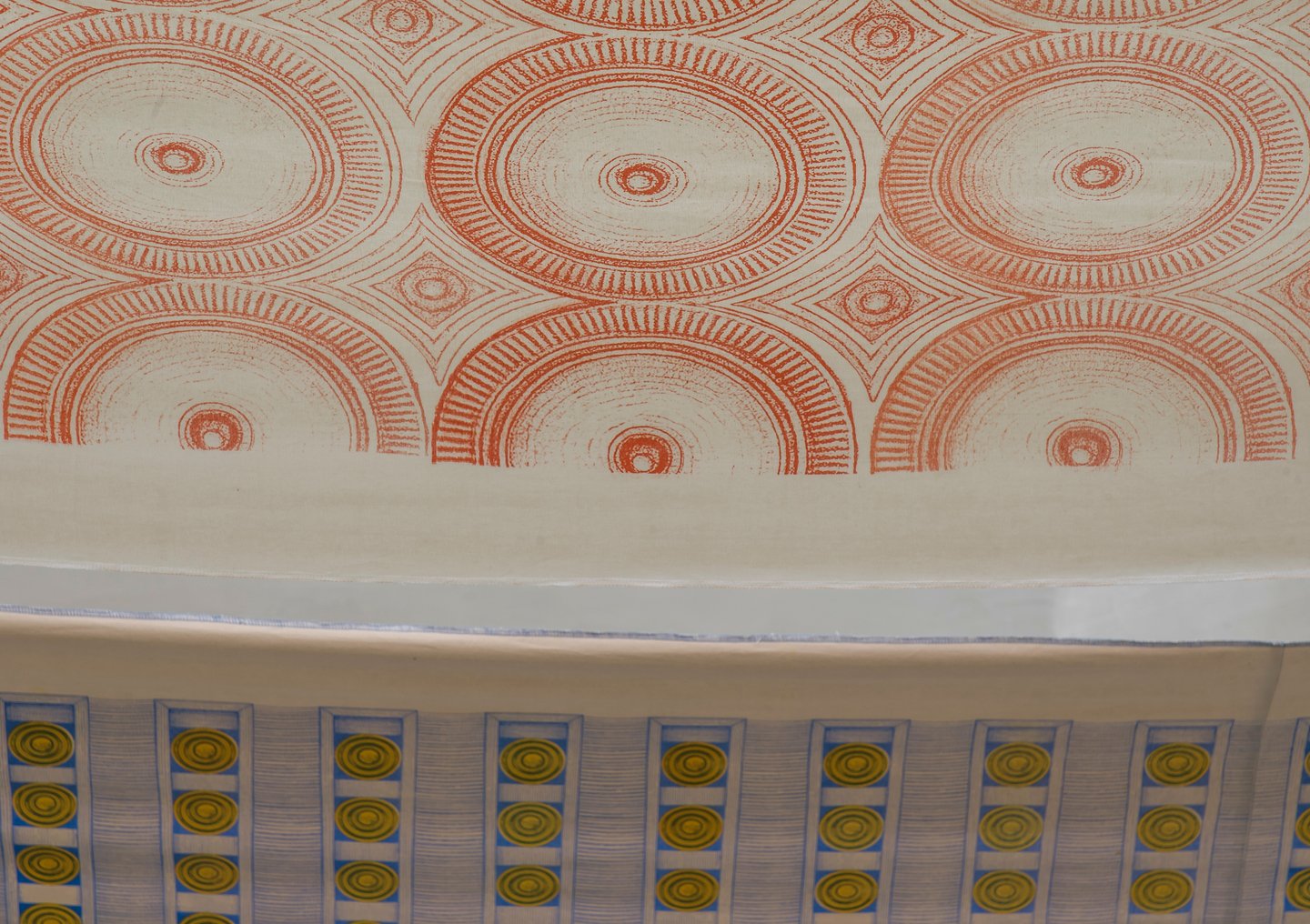


Эльдар Ганеев. Из проекта «Метросвет», 2025. Ткань, шелкография
©ЦТИ «Фабрика» (фото: Таня Сушенкова)
На стене напротив Зак Кахадо исследует почву Басманного района — разрывы, трещины, грязь. На поверхности его «землистых» плоскостных работ появляются объемные формы из разноцветных кубиков — отсылка к бездумному миру развлечений, удобств и бессмысленного китча.


Зак Кахадо. «Провал западной философии XX века» (диптих слева возле пирамиды из шин), 2024. Джут, бетон, краска, конструктор Lego, металл, гвозди
©ЦТИ «Фабрика» (фото: Таня Сушенкова)
Мастерская Валерия Чтака, находящаяся буквально в сердце «Фабрики», — «целла» кластера, как точно заметил Михаил Сидлин. Выставка ещё раз наталкивает на размышления о том, что в постиндустриальной реальности этого места сталкиваются смыслы, миры живых и мертвых художников. В рамках экскурсий с куратором зрители погружаются в пространство, где когда-то работал прекрасный художник, один из негласных символов «Фабрики»…


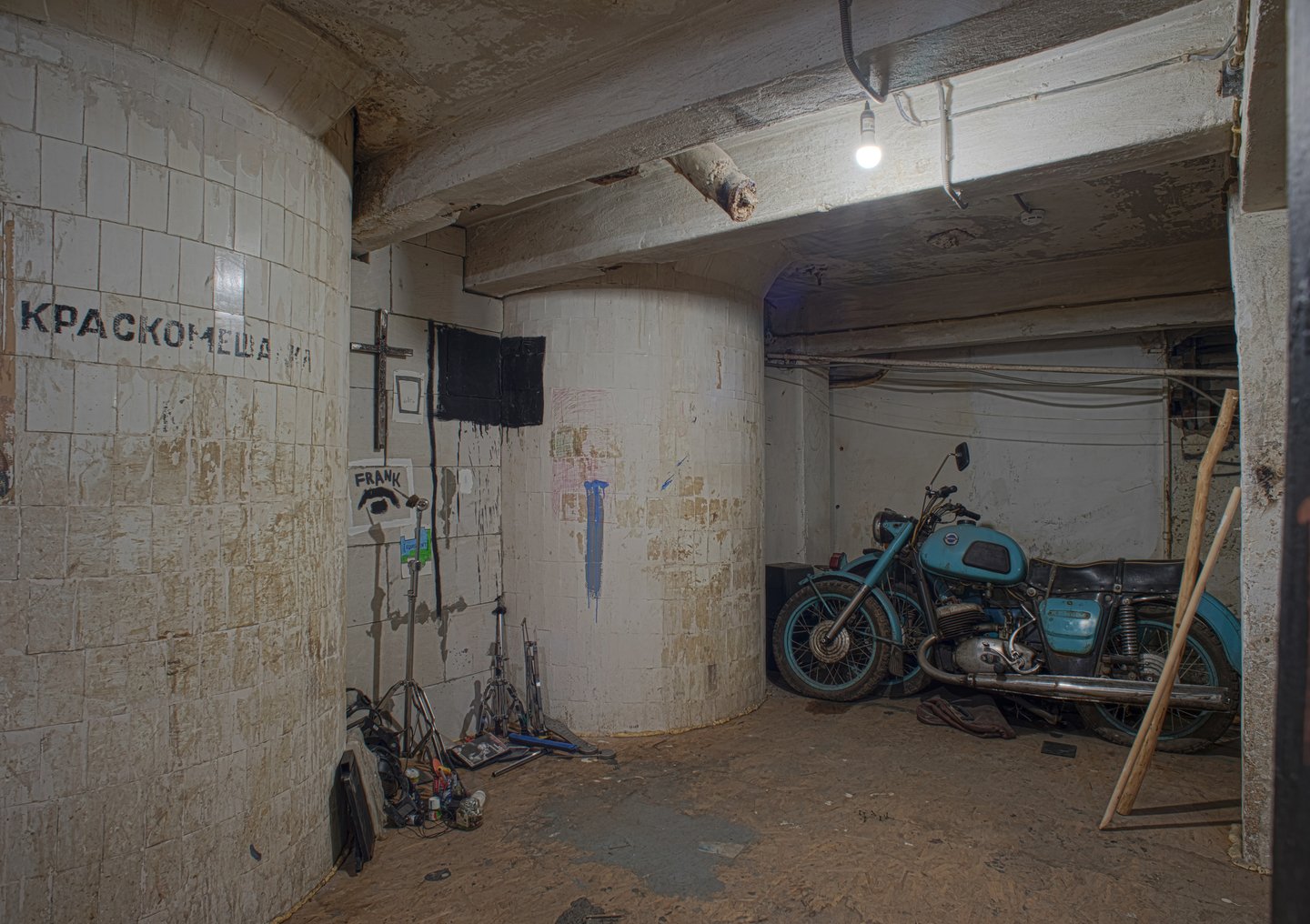

Мастерская Валерия Чтака на «Фабрике»
©ЦТИ «Фабрика» (фото: Таня Сушенкова)
Мария Арендт и Алексей Веселовский обращаются к теме опор, конструкций и структур, удерживающих сооружение от распада. В многослойных картинах «Воронка / Горизонт / Башня» и «Башня / Горизонт / Воронка» (2025) Алексей Веселовский изучает пластику и визуальность опорных структур: рассматривает взаимодействия Башни и Анти-башни, говорит о стройке и разрушении. Башня — образ возвышения. Мария Арендт в серии текстильных работ разных лет «Башня Шухова» создает опору для «Фабрики» — встраивает образ Шаболовской башни в одну из лестничных площадок кластера, надеясь удержать его от разрушения.


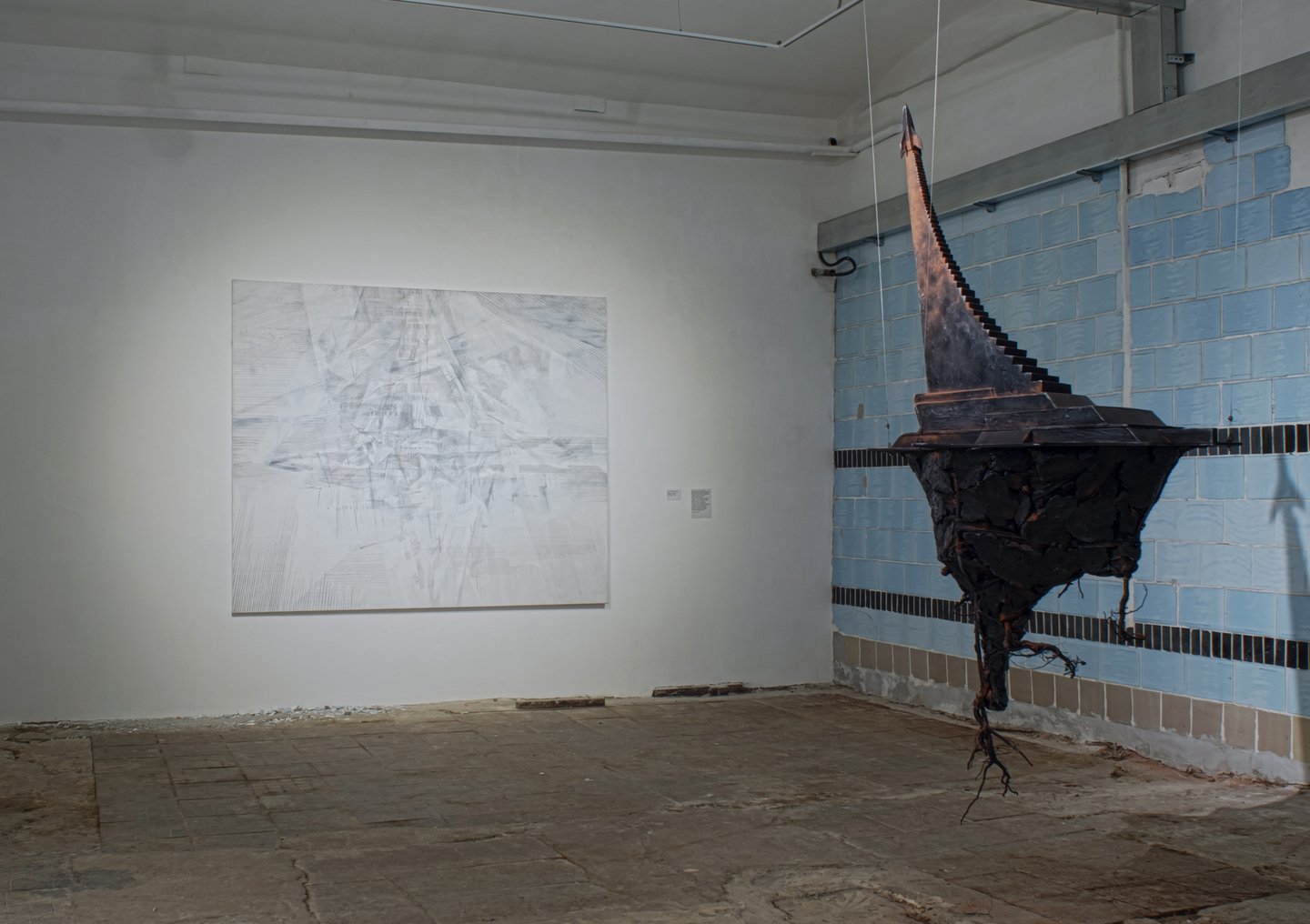

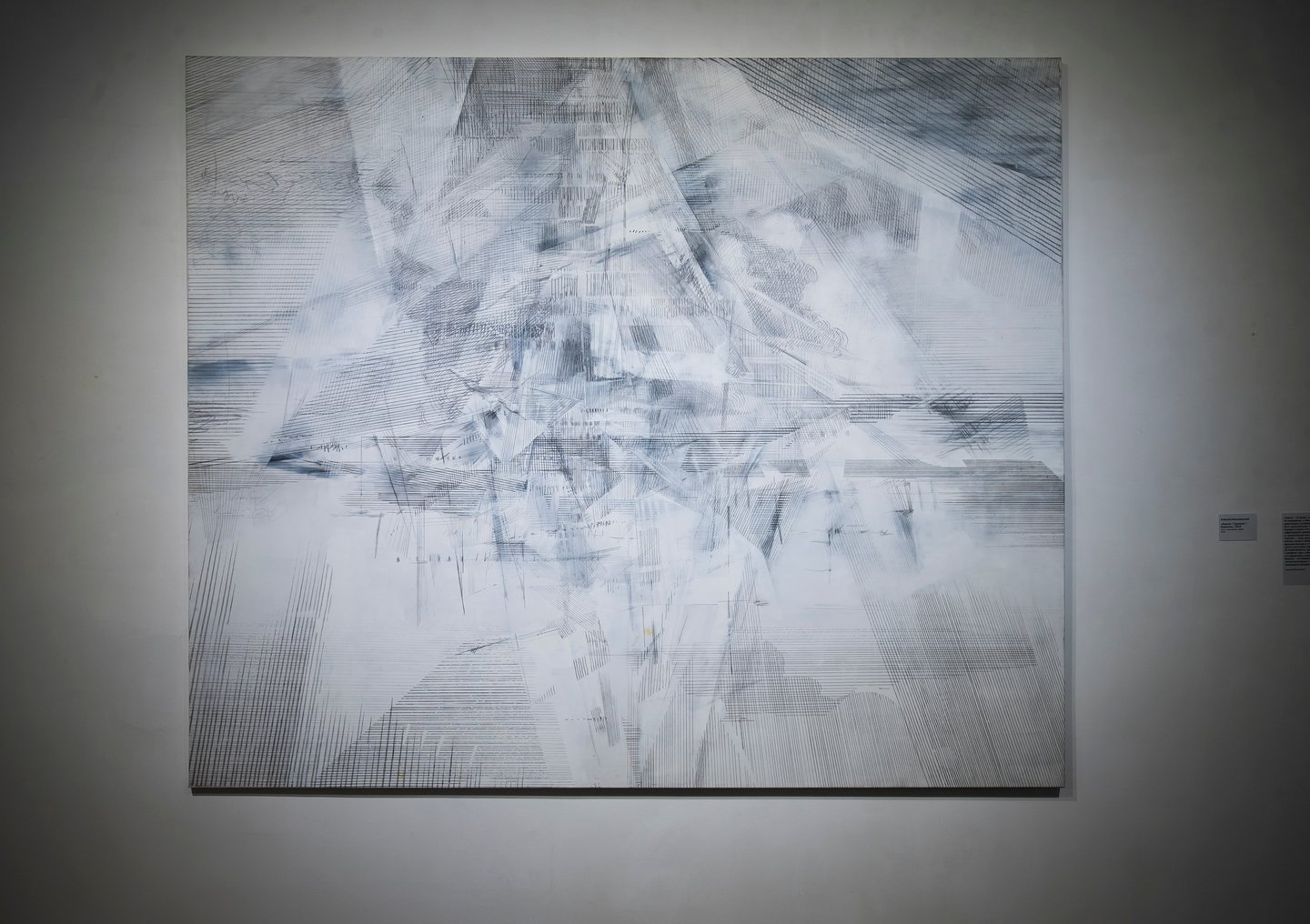
Алексей Веселовский. Работы «Воронка / Горизонт / Башня» и «Башня / Горизонт / Воронка», 2025. Смешанная техника
©ЦТИ «Фабрика» (фото: Таня Сушенкова)


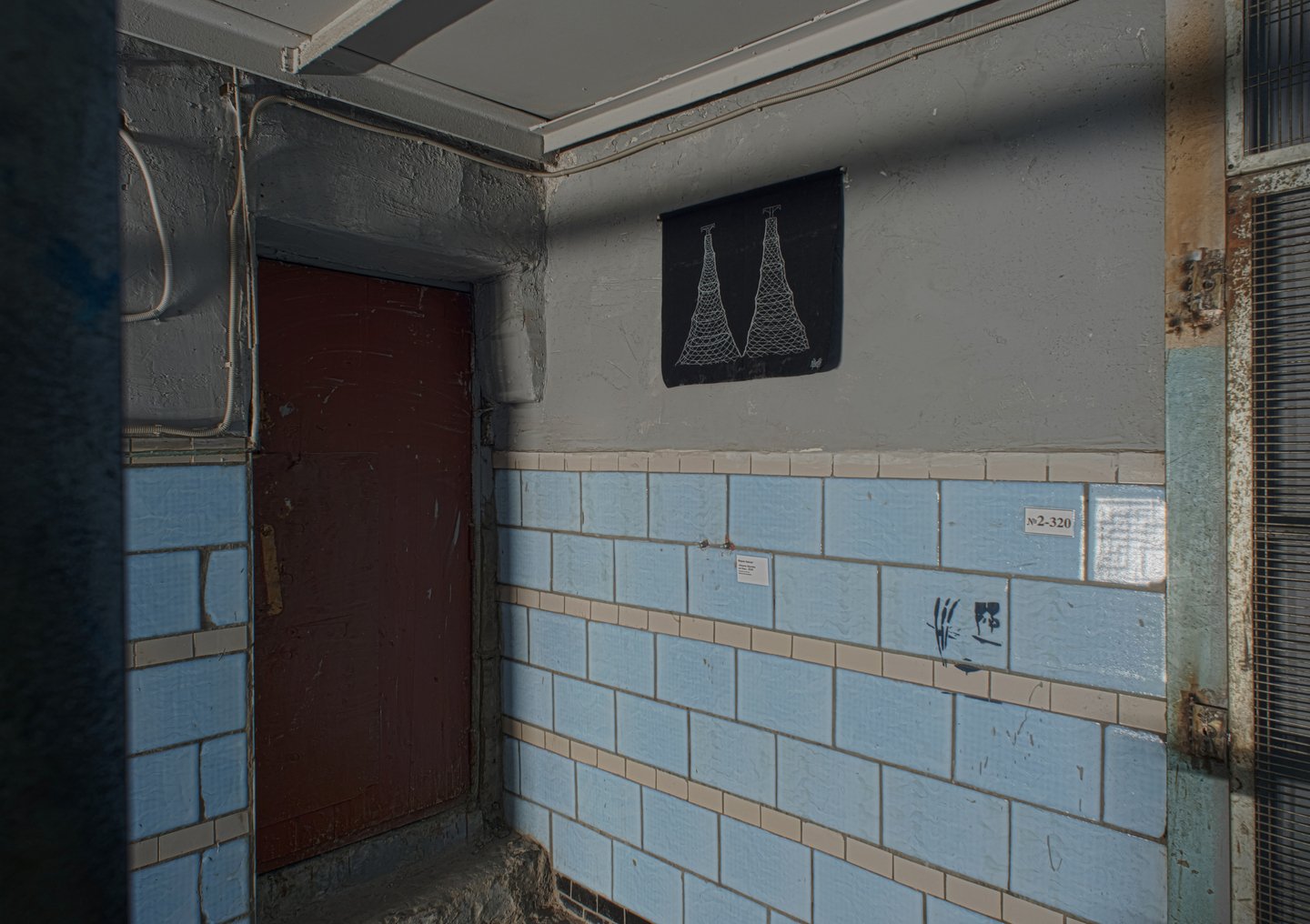
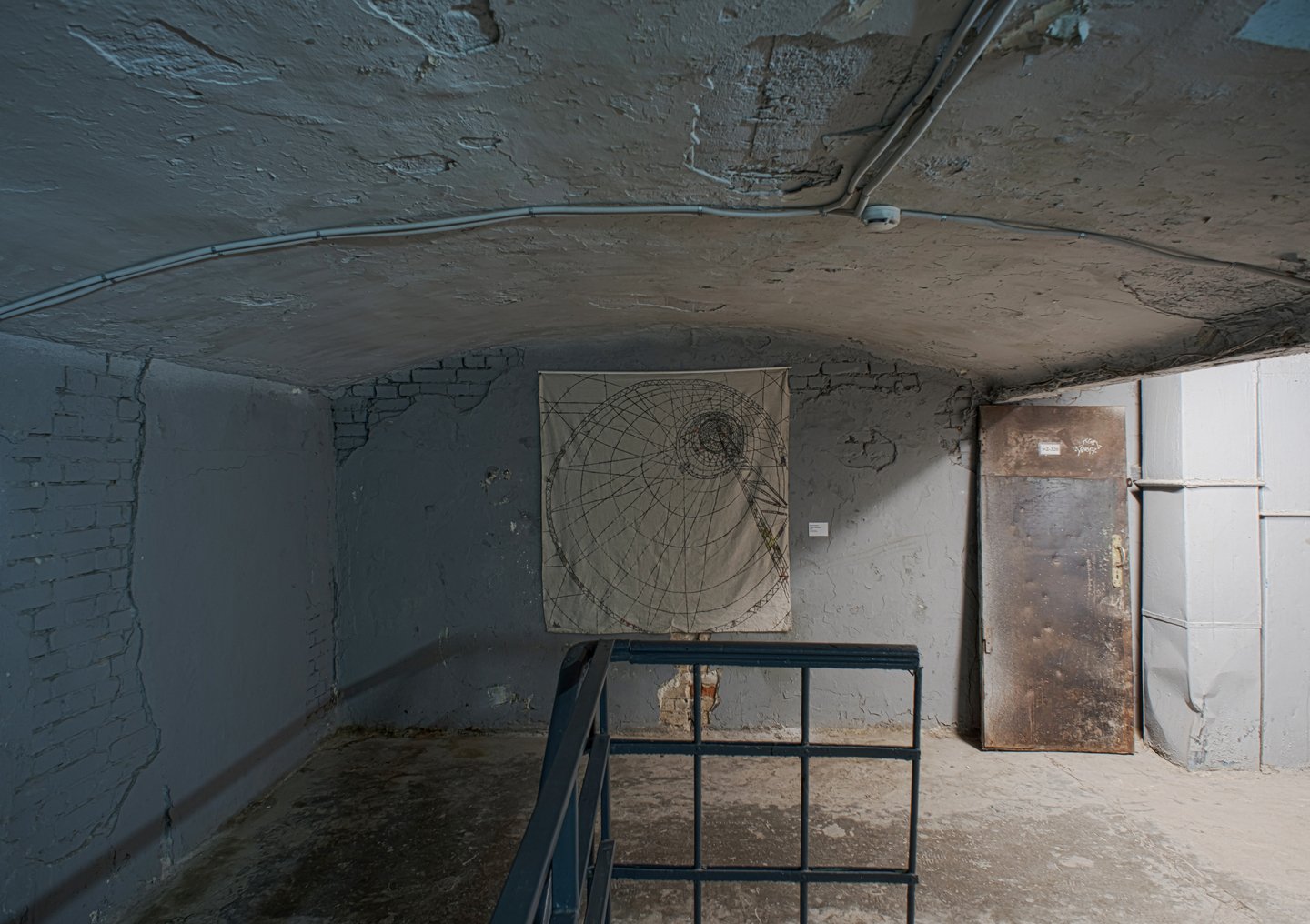
Мария Арендт. Работы разных лет из проекта «Башня Шухова». Льняное полотно, машинная вышивка
©ЦТИ «Фабрика» (фото: Таня Сушенкова)