5-21-26-1. AI
Концепция организации строится на познании внутреннего и внешнего мира через взаимодействие человека с облеченным в форму арт-объекта искусственным интелектом, который запраграмирован на ответы, в основе которых лежат мировые религиозные учения.
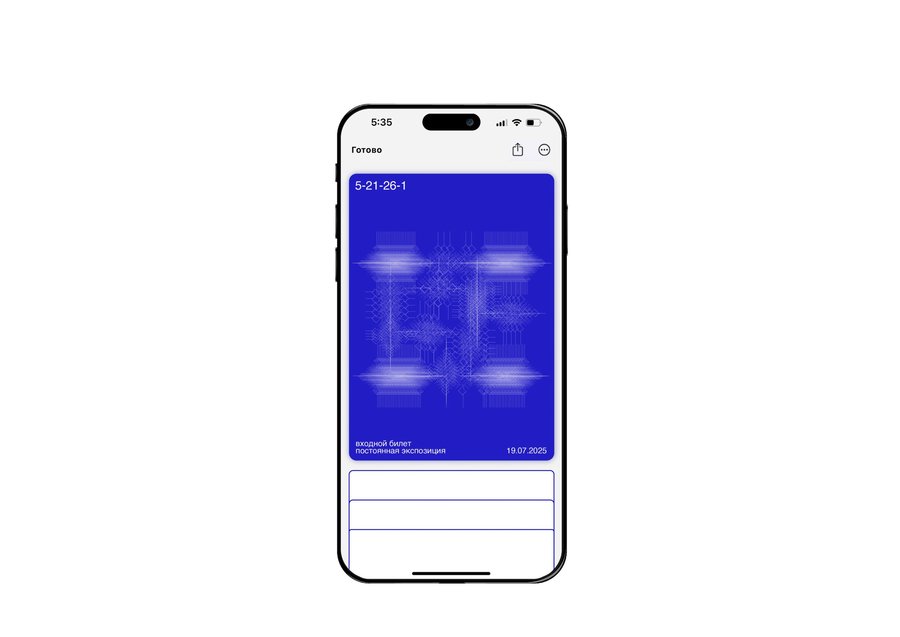
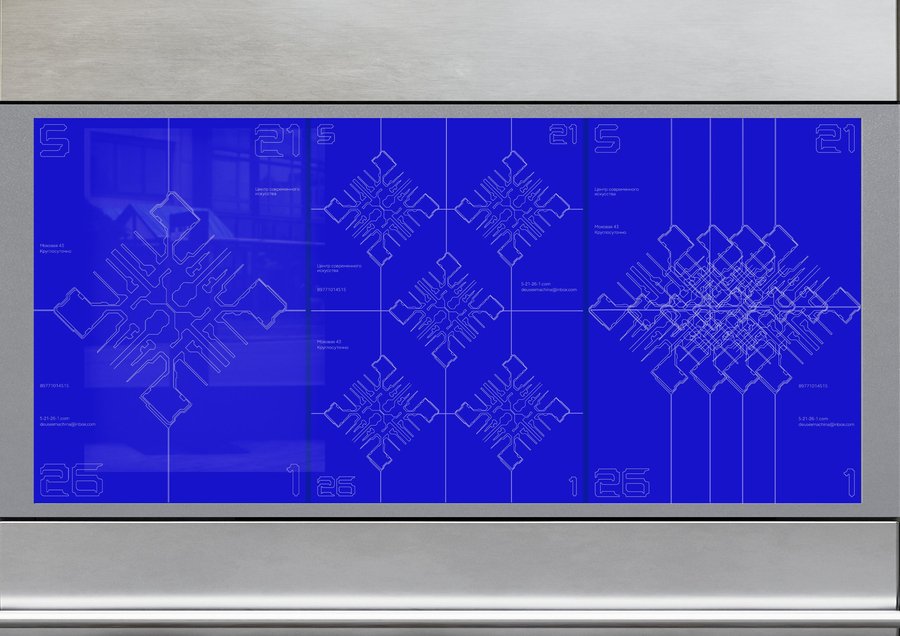
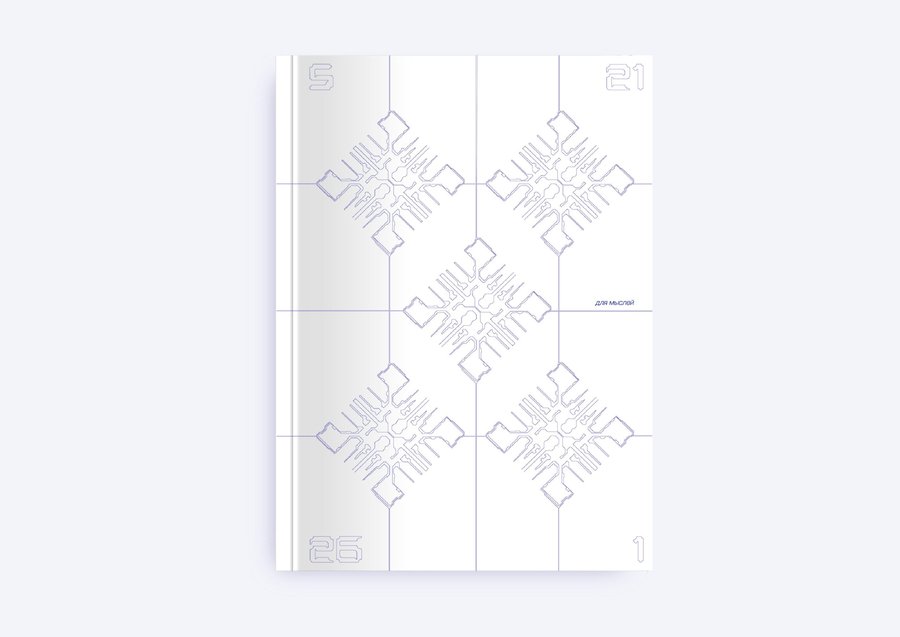
Первый этап — формулирование промпта для генерации изображений с помощью GPT. Я описала ключевые характеристики своего существующего проекта, добавила описание референсов для будущих генераций. Второй этап — генерация изображение через нейросеть Perplexity.
Айдентика
Промпт (1): Описание проекта и его визуальные составляющие (прикреплены): Концепция организации строится на познании внутреннего и внешнего мира через взаимодействие человека с облеченным в форму арт-объекта искусственным интелектом, который запраграмирован на ответы, в основе которых лежат мировые религиозные учения. Создай промпт, который поможет мне сгенерировать изображения в нейросеть perplexity, чтобы он сделал мне дополнительный визуал для проекта в виде общей айдентики проекта, пространства (внешнее и внутреннее), мерча, навигации и т. д. Проект должен быть минималистичным, ретрофутуристичным. Основной референс — Buddha TV, Нам Джун Пайка.
Промпт (2): Design concept for minimalist merchandise of a retrofuturistic cultural center. The items should reflect the core aesthetic: calm, contemplative, and minimalist. Core Inspiration: The interior described: vast empty white spaces, scattered old CRT monitors (1980s-1990s), soft light, neutral color palette (white, light grey, beige, muted black). Philosophy of Nam June Paik’s «TV Buddha» and retrofuturistic anime aesthetics (like «Angel’s Egg»). No clutter, no chaos. Art Direction: — Style: Modernist brutalism meets Zen minimalism. Clean, geometric, editorial. — Graphics: Abstract, subtle, and symbolic. Use minimal lines, geometric shapes suggesting old monitors, antennas, or serene Buddha-like silhouettes integrated with simple tech forms. — Color Palette: Exclusively white, light grey, warm beige, muted/off-black. No bright colors. — Mood: Calm, intellectual, quietly futuristic, nostalgic, and contemplative. — Physical Texture: Think of muted print on high-quality, soft fabrics (like heavy cotton, brushed fleece) or smooth, matte surfaces (tote bags, ceramic mugs).
Основной промпт, который является базовым началом для всех последующих запросов нейросети. Далее — добавляется блок, про конкретный объект, который необходимо сгенерировать: Minimalist retrofuturistic cultural center interior, large open space, a lot of empty white space, calm and contemplative atmosphere. Old CRT monitors from the 1980s–1990s placed minimally in space, soft light, neutral color palette (white, light grey, beige, muted black). Inspired by Nam June Paik «TV Buddha» and retrofuturistic anime aesthetics. No decorations, no clutter, no chaos.
Промпт: Logo design for a futuristic spiritual AI startup. Simple geometric symbol inspired by sacred geometry and artificial intelligence. Bright optimistic color palette, clean modern style. Minimalistic, scalable logo on light background, utopian sci-fi aesthetic.
Minimalist retrofuturistic cultural center building exterior, modern architectural visualization, where modernist brutalism meets Zen minimalism. A calm monolithic structure made of warm light grey concrete with off‑white accents, no people, no trees, no clutter, neutral overcast daylight, soft shadows. From different perspectives.
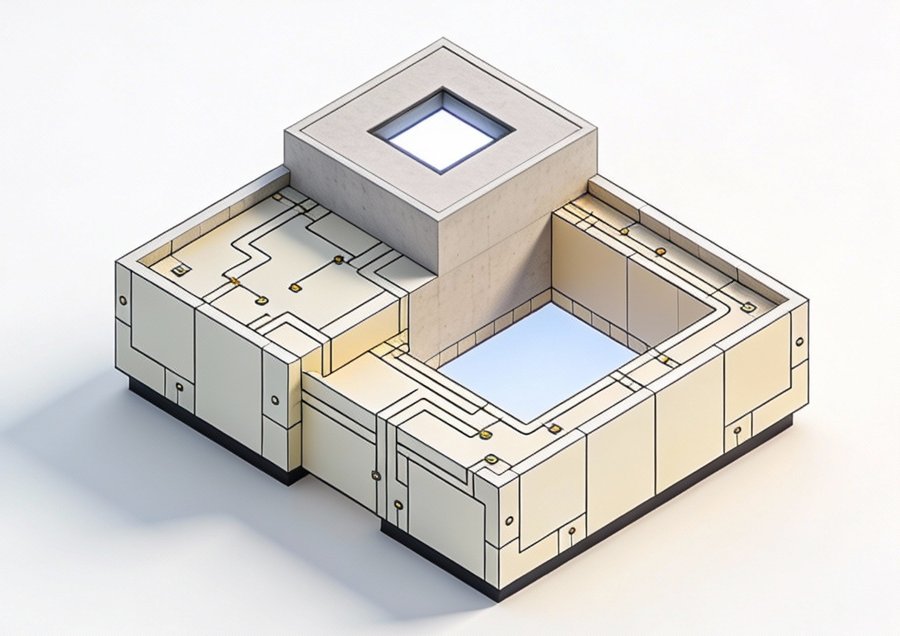
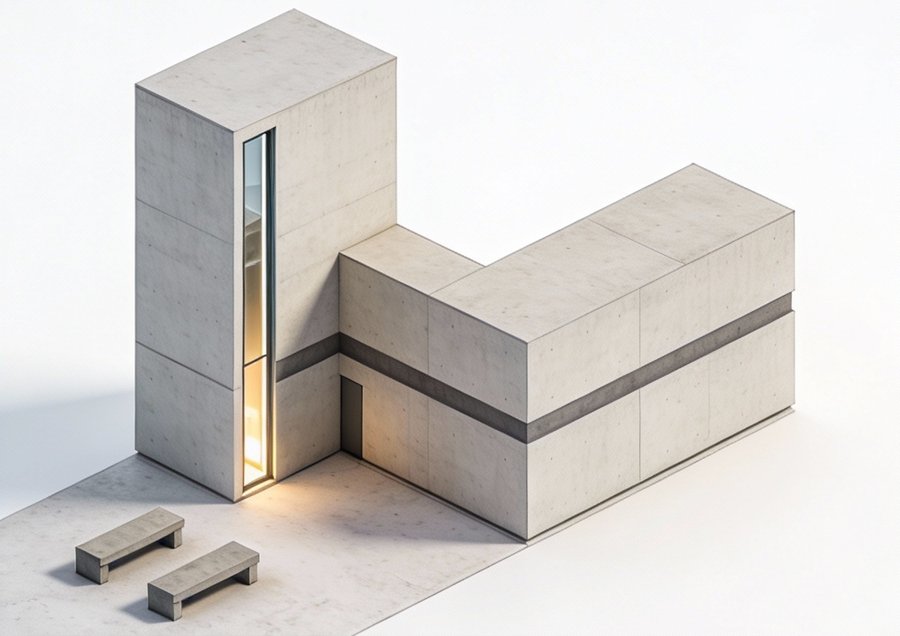
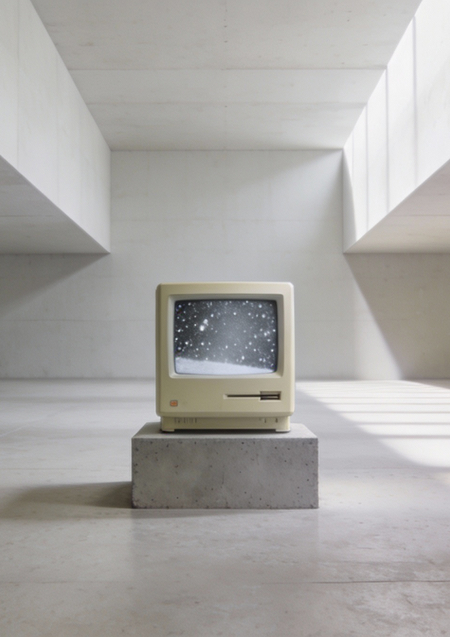
A spacious empty hall with a very high ceiling, an almost monochrome white–grey–beige space. The walls and ceiling are smooth, with a subtle sense of modernist brutalism: large monolithic planes, sharp geometric lines, hidden light sources. The floor is even, light concrete with a soft matte sheen. In the center of the hall stands a single old CRT monitor from the 1980s–1990s in a beige‑cream casing, placed on a low, raw concrete plinth. The monitor is either turned off or shows a very soft, barely visible black‑and‑white «snow». There are no cables, furniture, or people nearby. The light is soft, coming from above and the side, casting long, very gentle shadows and emphasizing the emptiness. The color palette stays strictly within white, light grey, warm beige, and muted black. The atmosphere is calm, contemplative, slightly mystical, as if this were a temple of technology and silence. The camera is at human eye level, with a straight-on view, conveying a sense of depth and a large volume of air. No decor — only architecture, light, and a single monitor.
Internal wayfinding system inside a minimalist retrofuturistic cultural center, inspired by the philosophy of Nam June Paik’s «TV Buddha» and the aesthetics of tranquil brutalism. A view of several wayfinding elements in a single frame, set against light concrete and white walls, with soft diffused light and long gentle shadows. The color palette: white, very light grey, warm beige, muted black.
Wall sign. A large smooth concrete wall with a recessed rectangular panel made of matte light grey metal. On the panel, small neat geometric grotesque lettering reads: «HALL A», «CRT ARCHIVE», «SCREENING ROOM», with arrows drawn as thin lines. The text is in uppercase, very small size, with generous letter spacing. No pictograms, only text and lines.
Tactile floor guide. On the light concrete floor runs a narrow inlaid strip of slightly darker grey leading away from the viewer. At regular intervals, small square markers are embedded into the strip, resembling pixels or scanline dots on a monitor. Next to it, very delicately, a small inscription reads «VOID TERMINAL — NORTH HALL».
Hanging sign. A narrow horizontal panel under the ceiling, made of thin matte white composite, suspended on almost invisible cables. Along its bottom edge runs small text: «RESTROOMS», «EXIT», «CAFÉ (SILENT)» with arrows, all in muted black. The panel looks like a glowing line of an old terminal, but without overt retro styling.
Room number and minimal pictogram. On a smooth white wall next to an opening, a large but very light «02» in light grey, and beneath it a small line icon: a rectangle‑screen and a small circle, referencing «TV Buddha». Under the icon is minimal text: «MEDITATION ROOM».
The overall atmosphere is calm and contemplative: plenty of empty space around each element, the wayfinding feels like part of the architecture rather than applied graphics. No bright colors, no unnecessary embellishments. (see the generated image above)
Design a series of utilitarian employee items for a minimalist retrofuturistic cultural center. These are physical artifacts that exist within the described aesthetic universe. Core Aesthetic: The atmosphere of the center: vast empty white spaces, old CRT monitors, calm and contemplative, neutral palette (white, light grey, beige, muted black). Modernist brutalism meets Zen minimalism. No decorations, no clutter. Design Principles: Functionality & Quiet Presence: Items should be highly functional yet feel like quiet, intentional art objects. Materials: Think of matte PVC or recycled gray cardstock for IDs; soft, heavy cotton for clothing; brushed aluminum or matte plastic for hardware. Color Palette: Dominantly white, light grey, beige. Accents in muted black or dark charcoal. No bright colors. Typography: Clean, geometric sans-serif font (reminiscent of 80s tech manuals or modernist architecture). All text is minimal, small, and precisely aligned. Items to design (present them isolated on a clean white surface with soft, long shadows, editorial photography style): 1. Employee ID / Access Card: Format: A vertical card. Base: Matte white or very light grey PVC. Design: A single, fine line in muted black forms a subtle outline of a CRT monitor in the top third. Below it, minimal employee information is set in small, crisp type: «NAME», «ROLE: CURATOR/TECH», and a small barcode or minimalist geometric pattern acting as an access key. A small, circular employee photo (black and white, high-contrast) placed like a screen within the monitor outline. 2. Staff T-shirt / Uniform (laid flat): Item: A premium, heavyweight t-shirt in light heather grey or warm beige. Design: No large logos. Only a small, subtle embroidery or a muted print on the left chest area (near the heart). The design is a tiny, abstract icon: a circle (Zen) partially intersecting a square (monitor/architecture). Color of the icon: slightly darker grey or off-black.
3. Lanyard for the ID Card: Material: A woven fabric lanyard in a solid, dark charcoal grey. Detail: The breakaway clasp and the end clip are made of matte, brushed metal. No plastic tags. 4. Visitor/Event Pass (for special openings): Format: A smaller, horizontal card or a sticker to be worn. Thick, off-white recycled paper or matte beige sticker. Design: Even more minimal than the staff card. A horizontal line in light grey. Below it, in small, elegant type: «VOID TERMINAL» (center name) and «CONTEMPLATIVE ACCESS». The date is printed in a clean, numeric format (e.g., 12.04.2025). 5. Clipboard or Digital Tablet Case (for staff use): Object: A simple clipboard with a matte aluminium clip or a folio case for a tablet. Material: The board/folio is made of smooth, light grey slate or covered in a beige-grey fabric. Detail: No branding visible. The object’s beauty is in its raw, brutalist materiality and simple form. Overall Scene (optional for context): One of the items (e.g., the ID card) is lying on a raw concrete surface next to an old, beige CRT monitor keyboard, with soft light raking across the scene. The mood is silent, purposeful, and slightly anachronistic.
Design Principles: — Format: A single, tall and narrow leaflet or a small booklet with perfect binding. Dimensions reminiscent of a tech manual from the 1980s or a slim poetry book.
Material: Thick, textured off-white or warm grey recycled paper. Matte finish, soft to the touch.
Typography: Exclusive use of a clean, geometric sans-serif typeface (evoking 80s digital displays or modernist architecture). Strict typographic grid. Text size is small, leading is generous.
Color Palette: Black text printed at 80-90% opacity (muted black). Occasional use of a single accent color as a fine line or shape: a very light grey or a dusty, muted beige.
Imagery: Sparingly used. High-contrast, grainy black-and-white photographs or abstract digital renders of the architectural space and CRT monitors.
Content & Layout (Show a flat lay of the open brochure on a raw concrete surface, with soft directional light):
Page 1 (Cover): Background: Texture of the raw paper. Center: A small, simple line drawing icon: a circle (Zen) placed inside a square outline (monitor/architecture). Below it, in small, crisp capitals: the name of the center (e.g., «STATIC ZENITH»). At the very bottom, in tiny type: «VISITOR MANIFESTO». Page 2 & 3 (Spread, Interior): Left Page (2): A full-bleed, grainy black-and-white photograph. An extreme wide shot of the empty hall, with a single CRT monitor on a plinth in the distance. The image is high-contrast, almost abstract.
Right Page (3): Pure text on a white/off-white background. A short, poetic manifesto in English (3-4 lines max) set in the center of the page. Example: CONFRONT THE VOID. LISTEN TO THE STATIC. FIND CLARITY IN THE SPACE BETWEEN PAST FUTURE AND PRESENT MOMENT. Typography is precise, with ample white space around.
Page 4 & 5 (Spread, Practical Info):
Left Page (4): A minimalist, schematic map of the center. Represented as white geometric shapes (rectangles for rooms, a circle for the central hall) on a light grey field. A single small «X» marks «YOU ARE HERE». Labels are tiny and clean.
Right Page (5): Essential information set in a strict list format, aligned to a grid. `
A cohesive social media screenshot (Instagram carousel post) for a minimalist retrofuturistic cultural center.
Visual Theme: Directly reflects the interior: vast empty white space, calm and contemplative atmosphere, soft light, neutral color palette (white, light grey, beige, muted black). Inspired by Nam June Paik’s «TV Buddha» and retrofuturistic anime stillness.
Post Composition (show as a phone screen with minimal UI): 1. First Image (Primary): An editorial shot of the cultural center’s interior. High ceiling, clean brutalist architecture with zen minimalism. A single, old CRT monitor (1980s-1990s model, off-white or beige) sits alone on a raw concrete plinth in the center of a vast, empty white room. Soft, directional light creates gentle, long shadows. The monitor screen is dark or shows static/gentle noise. Straight perspective, high-resolution photography. 2. Second Image (Detail): A close-up, abstract shot. The textured screen of the CRT monitor, with a barely visible, faint reflection of an architectural line or a circular shape (subtle nod to «TV Buddha»). Colors: light grey, beige, off-black. 3. Third Image (Graphic/Text Slide): A clean, minimalist graphic slide on a white background. The text is set in a sleek, geometric sans-serif font (like a modernized version of 80s tech fonts). Color: muted black or dark grey. — «CONTEMPLATION / TECHNOLOGY» — A simple, small line icon combining a square (monitor) and a circle (moon/lens). — Name of the center (e.g., «VOID TERMINAL» or «STATIC ZENITH») and event details (e.g., «Screening: Tarkovsky’s 'Solaris' | 12.04.2025 | 20:00»).
Overall Style: Editorial photography meets UI design. No clutter, no chaos, no decorations. The entire post feels like a quiet digital artifact. The phone’s interface (like the time bar, battery icon) is minimal and in a muted color. Soft shadows, straight angles, impeccable negative space.
Mood: Calm, intellectual, mysterious, nostalgically futuristic, serene.