Use of communication theory for TasteDJ brand
Application of communication theory in the field of design
Regardless of the specific field of design, whether it is graphic design or even interior design, it is important to dissociate design from art. Design is not all about aesthetic pleasure, it also has to solve a specific problem. This means that design is primarily oriented toward the people for whom it is created, rather than the self-expression of the designer. Therefore, a designer needs to have a clear understanding of the client’s target audience. To identify the needs of both the client and the audience, understand how these needs could be met and choose the proper way to do so, designer should actively interact with them. Such interaction is, in essence, a form of communication.
However, just the fact of interaction is not enough. In order for a problem to be successfully solved, communication itself must be effective. In this context, all forms of communication are important: interpersonal, group, and public communication. Whether designer is communicating with a client, colleagues, or the audience, it is necessary to find a right approach for each case. Knowledge of communication theory makes it possible to better understand human behavior, identify needs, and even predict possible outcomes. This is especially important because, when solving a problem, a designer aims to provoke a specific response — feeling of satisfaction and needing in further cooperation. Therefore, ability to communicate effectively has a direct influence on the results a designer is able to achieve.
Presentation for a general audience

TasteDJ logo
Generated with chat GPT
We are TasteDJ. We don’t follow recipes — we break them. We mix flavor the way DJs mix sound: loud, raw, and against the rules.
Every bottle is a track. Every lineup is a playlist. Every dish is a dancefloor.
Generated with chat GPT
Freedom of expression — eat the way you want, not the way you’re told
Bold experimentation — risk is part of the mix
Individuality — your taste, your stance
Generated with chat GPT
Our mission is to disrupt the way people think about flavor, giving them the tools to remix their food, reject boring norms, and turn every meal into an act of personal rebellion.
Presentation for a professional audience
Our primary target audience consists of adventurous individuals who value authenticity. The following strategies were implemented to effectively capture their attention.
Positioning
Our brand archetype is the Outlaw, with the Maverick subtype. It is intended to appeal to an audience that embraces unconventionality and freedom.
Metaphor served as the foundation of our marketing campaigns, with sauce flavors compared to music. DJ music was selected as a reference, as it originated in underground culture yet has gradually achieved mainstream popularity. Similarly, our brand aspires to attain broad recognition while preserving a rebellious aesthetic.


According to SCT, brands don’t build communities through facts, they build them through shared stories. The story of this particular brand would be «The world of food is boring because it follows rules. TasteDJ exists to break them». This message is emotional, imaginative and easy to dramatize and share.
For TasteDJ, the goal is not just to sell hot sauce, but to create a fantasy world around flavor rebellion.
Visual language
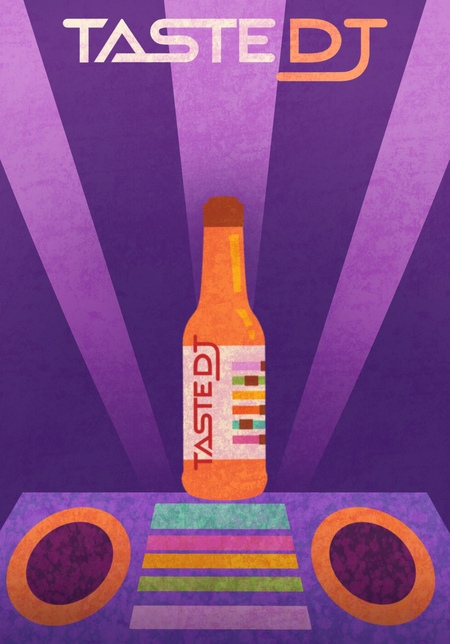
We use bold, high-contrast colors to capture the attention of our target audience. Hand-drawn posters are intended to evoke an underground aesthetic.
Marketing platforms
A variety of media channels may be utilized to promote the product. Marketing campaigns can include advertising on social media platforms, with short-form videos showing «illegaly flavourfull» food mixes, and influencers framed as Taste DJs.
Additionally, street marketing could be effective, using posters designed to resemble promotional materials for underground DJ events. Collabing with music artists and local music and art spaces could create a feeling of community associated with the brand.
Use of the online course as a basis for the presentations
The brand TasteDJ was developed prior to taking this course, however, some of the principles used in the Communication Theory course have been already implemented. Although those decisions were made intuitively, this only confirms the relevance of theoretical approaches that describe the communication process.
The communication of the TasteDJ brand addresses several aspects of communication theory. According to Craig’s classification, the brand mainly relies on the semiotic, sociocultural, and socio-psychological traditions, while the rhetorical tradition is used primarily in advertising, particularly in slogans.
First of all, TasteDJ relies on the semiotic tradition through the use of metaphor. Taste is presented as music, variety as a playlist, and the consumer as a DJ who «mixes» flavors (or «tracks») according to personal preference. This idea is central to the brand and shapes its visual and verbal style.
The sociocultural tradition makes it possible to trace how a chain of associations related to the DJ image transfers a musical context to the experience that the designer aims to convey to the consumer. Since in contemporary culture music and DJs are associated with freedom, creativity, and enjoyment, this metaphor passes the idea that the user will receive a similar emotional experience. These values are reflected in the brand platform, including the brand’s mission, character, tone of voice, and other elements.
The socio-psychological tradition is also actively used, as the brand’s communication is aimed at eliciting a very specific response from the audience. To achieve this, the target audience is carefully analyzed in terms of age, interests, tastes, and needs. This helps to shape the expected perception of the brand and influences the overall communication strategy.
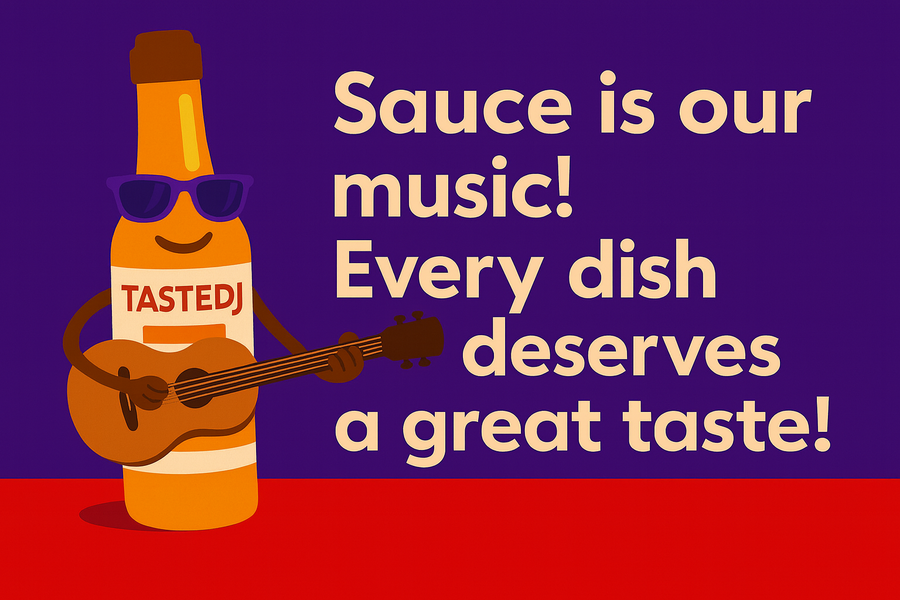
Finally, the rhetorical tradition is actively used in advertising communication. Through slogans, TasteDJ addresses the audience directly, involves them in a dialogue, and guides their response in order to form a desired attitude toward the product.
Sources
''Communication Theory: Bridging Academia and Practice'' online course.
Outlaw Brand Archetype https://www.ramotion.com/blog/outlaw-archetype/
Promotional campaign for TasteDJ by Vodopianova Ekaterina (images have been modified to fit the current project) https://hsedesign.com/project/4fc3771e016d49aabbcfd564884e7820
Images generated with chat GPT