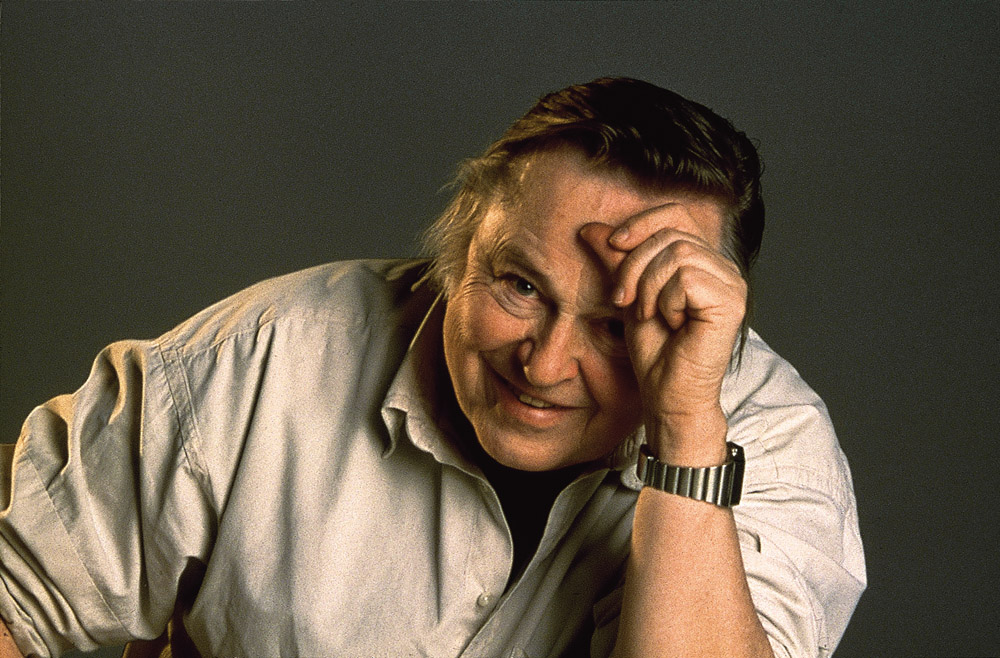
In 2011 the world star Eero Aarnio was proudly hosted in St.Petersburg by Projector and the company Martela. The designer’s arrival became possible due to the long-standing friendship of him and Martela, tested by time and many successful joint projects. This was Eero Aarnio’s first visit to Russia. In fact, such celebrities are quite a rarity, as, unfortunately, most of the iconic designers of the XX century have died. The only interview the master gave during his stay here was for Projector. We talked for about forty minutes, and here are the most interesting fragments of the exclisive interview.
Eero Aarnio was born in Helsinki, 1932, and studied there in 1954-1957 at the Institute of Applied Arts. In 1962, he opened his own studio, where he was engaged in designing interiors and furniture. Eero Aarnio is an innovative designer, always ahead of his time. Back in the sixties, he was one of the first to start working with plastics. The chairs and tables of unimaginable shapes and colors invented by him, as well as multifunctional objects with playful overtones, are the personification of the era of the sixties. At the time, the designer was already really famous. His objects, created almost half a century ago, are still considered something of the futuristic world. It is no coincidence that his famous Ball starred in such films as Mars attacks! and Men in Black. The first thing the creators of cinematic interiors of the future think of is the furniture designed by Eero Aarnio. The innovator himself, living ten meters away from the purest lake and being in constant contact with wildlife, is convinced that the era of plastic hasn’t come to its end.
Most of the objects created by Aarnio have received prestigious international awards. They are included in the collections of the largest museums in the world: the Museum of Modern Art in New York, Victoria and Albert Museum in London, Vitra Design Museum in Weil am Rhein.
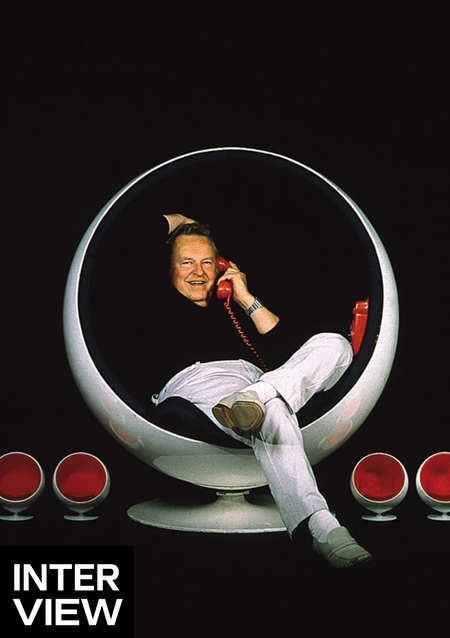
Mitya Kharshak (M.K.) Eero, I published this issue of Projector in 2009. It is entirely dedicated to Finnish design. And the main publication in it is about you — look!
Eero Aarnio (E.A.) Oh! Great. This is my picture from the seventies! And here is the Ball — my most famous object. It brought me the worldwide fame. Since I made it in 1963, I have only been doing what I like.
M.K. And how come the first independent project shot that immediately?
E.A.
Back in the early sixties, I’d just become a freelancer, after two years of working for the furniture company Asko. Pirkko and I (Eero Aarnio and Pirkko Attila got married in 1956. — M.H.'s note) had already had two young children — one and three years old. So I just needed a successful project! Its prototype was hand-made in my workshop. I first made a wooden frame that looked like a globe with parallels and meridians, then I covered it with a fabric. The result was a form that I filled with fiberglass. Then it took a lot of effort to manually bring the surface to the ideal. I had a good relationship with the director of Asko. He once came to visit me, saw the chair and asked, ‘Who did this?’ I told him, ‘It was me.’ He kind of immediately: ‘Is it reserved?’ — ‘Nope.’ Well, he borrowed it for a furniture exhibition in Cologne right away. After that success, I have never had any problems with offers!
M.K. You are still working very actively, aren’t you? What kind of projects are you interested in now?
E.A. I am running about fifteen different projects at a time, most of them for Finnish companies. I have only three customers from Italy. I mainly design furniture. Here, I’ve recently sketched an interesting jewelry project. It has not yet been put into production. It’s curious to try something new.
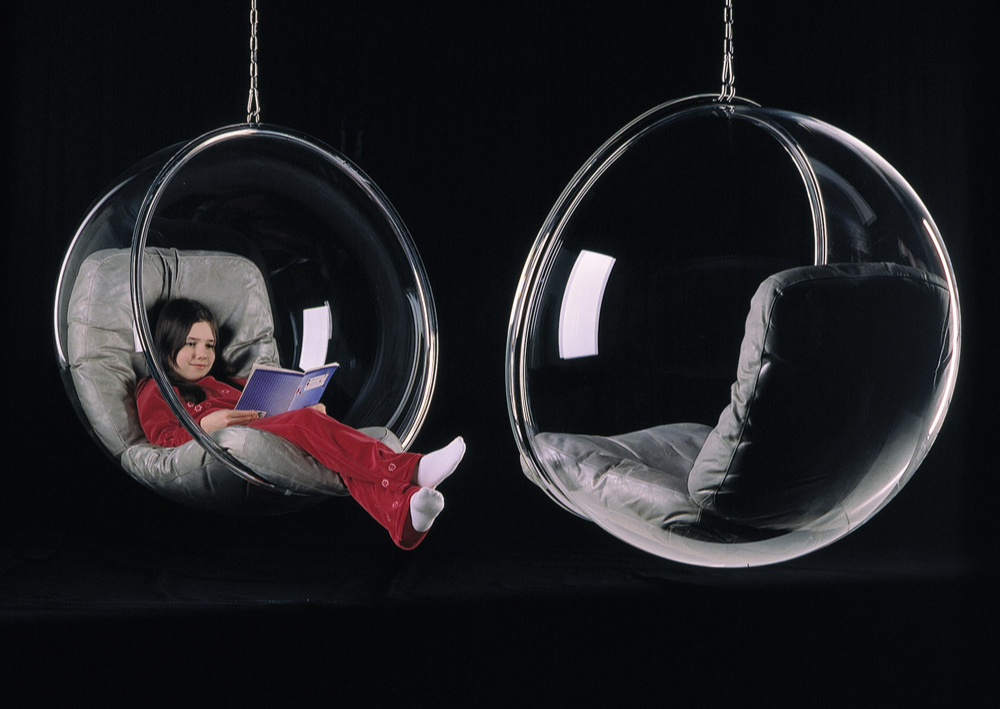
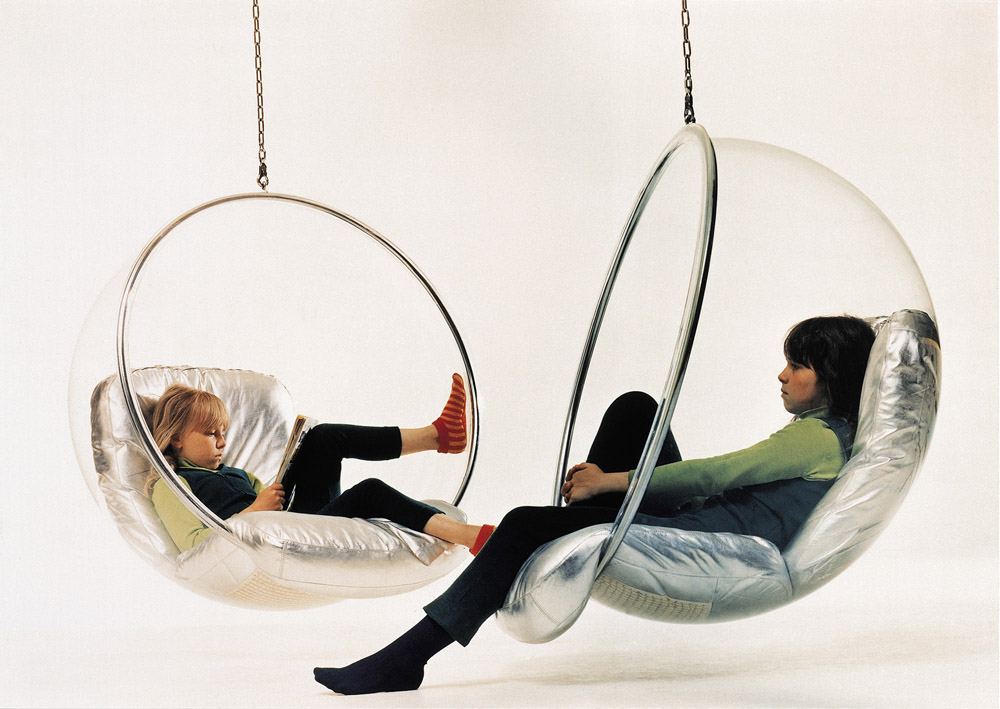
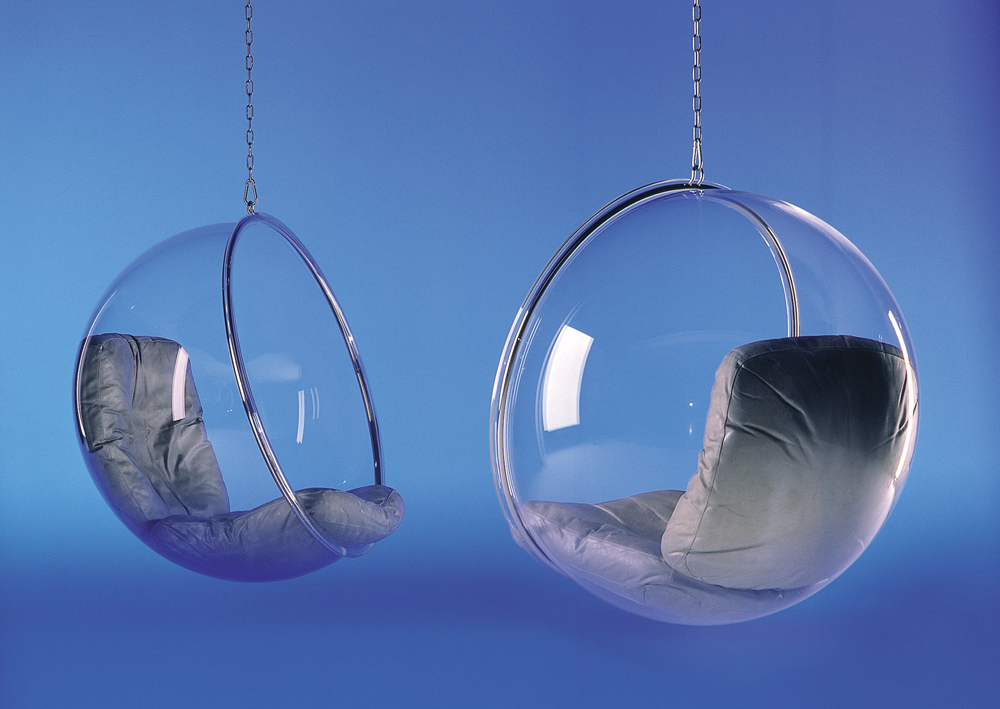
Ball
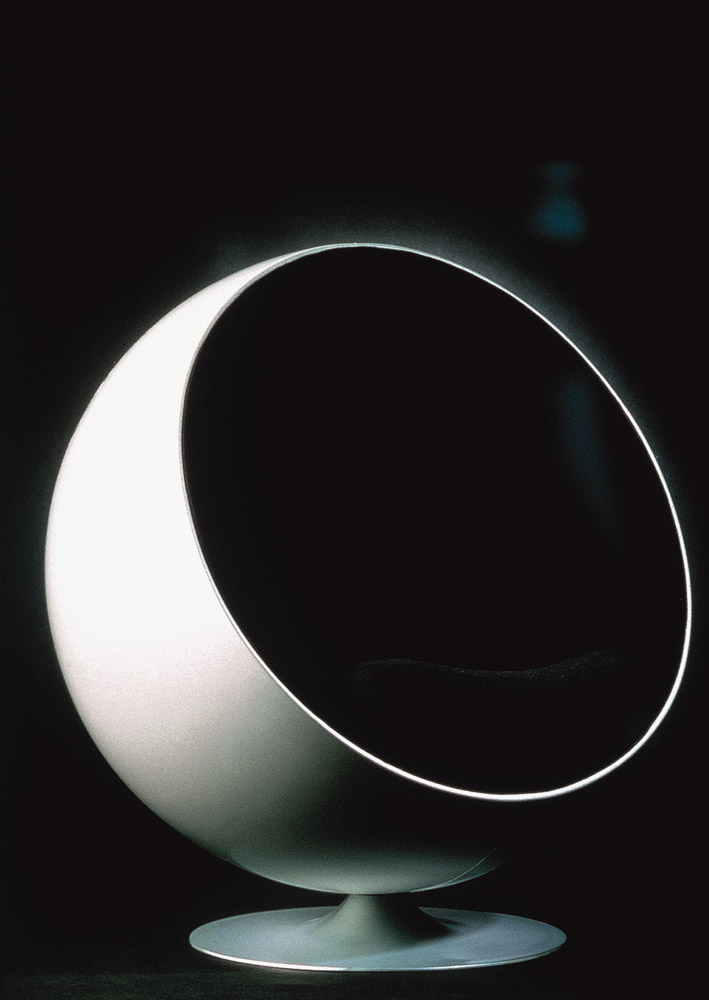
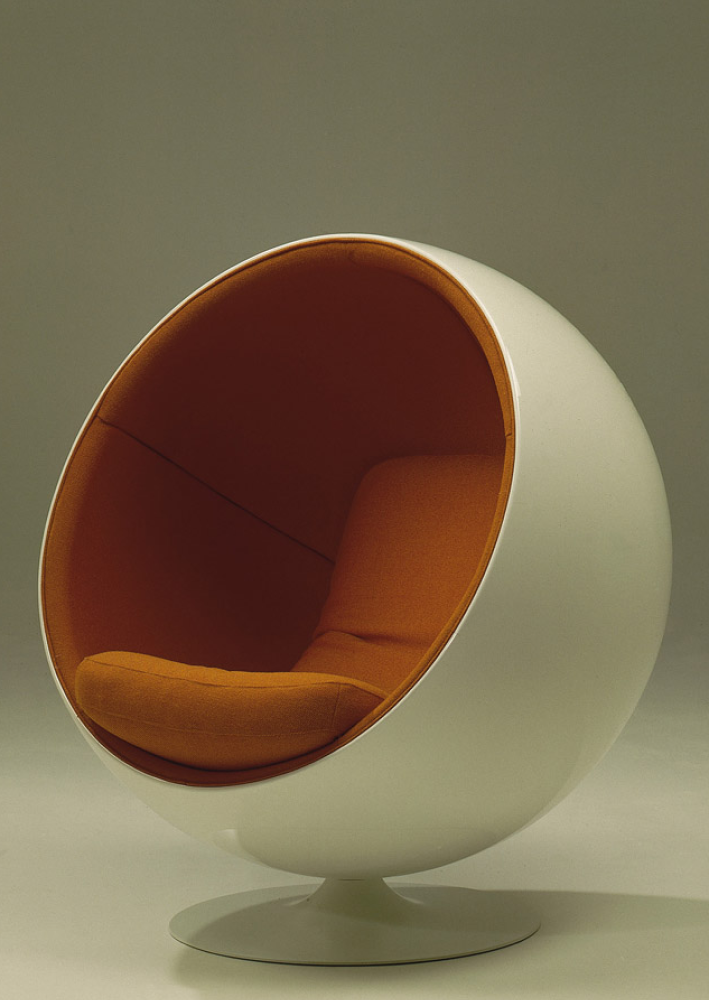
Ball
M.K. And how many people work in the studio of Eero Aarnio?
E.A. I do everything by myself. I don’t understand at all how one can hire another designer. I can’t do it. What should I do with them? Give them a pencil and say, ‘Draw a world bestselling chair for me’?! So what? For the same reason, I don’t take any trainees and have never taught. Although, of course, I always get a lot of offers from young designers who would like to work with me.
M.K. All by yourself! Has designing got any easier with the computer? Does it somehow speed up the process?
I don’t use a computer. In my workshop, there is a desk of one and a half by three meters. First I draw an object, then I make a full-size model. Then I draw three projections. Sometimes two is enough. I work same way as I did 50 years ago. The whole computer is here — is head. My main tool is the pencil. This is the easiest way.
M.K. Finnish design, as a rule, is associated with natural materials — wood, glass, metal, ceramics. Almost all of your objects are made of synthetic materials. What is the reason for this? And are you concerned by the worldwide trend of caring for environmental issues?
E.A. I’ve taken up wood quite recently, which is one simple reason for — now there are technologies that allow me to implement the ideas of shaping what I am interested in. Previously, it was impossible to make what I designed from traditional materials. Plastic is flexible, it takes any shape you draw. Now I have a prototype sofa in my workshop. It has not been put into production yet. There is expensive wood, and I have been looking for the highest quality leather for a long time. As a result, it turned out to be so expensive and bourgeois! I call it Gazprom. By the way, how are you doing with the Gazprom tower? Is it going to be build? I would sell my sofa to their headquarters. (Laughs) As for ecology, I have always said that I make such high-quality and durable things that they are passed down from a generation to generation with no need to be disposed or recycled. They just don’t age, and they are never thrown away.
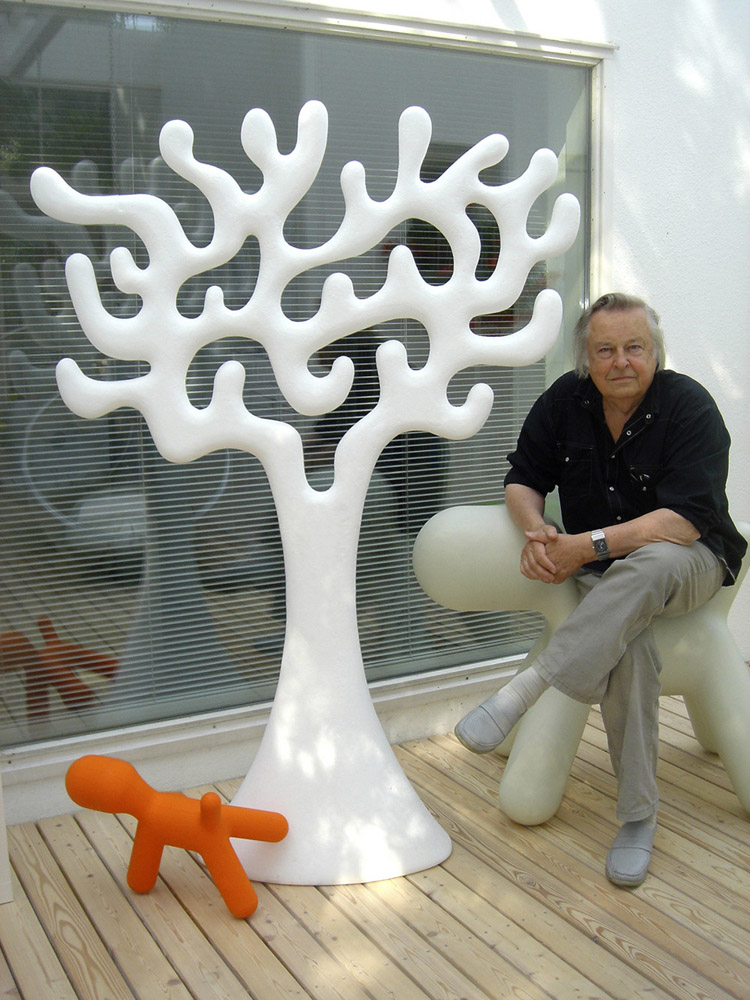
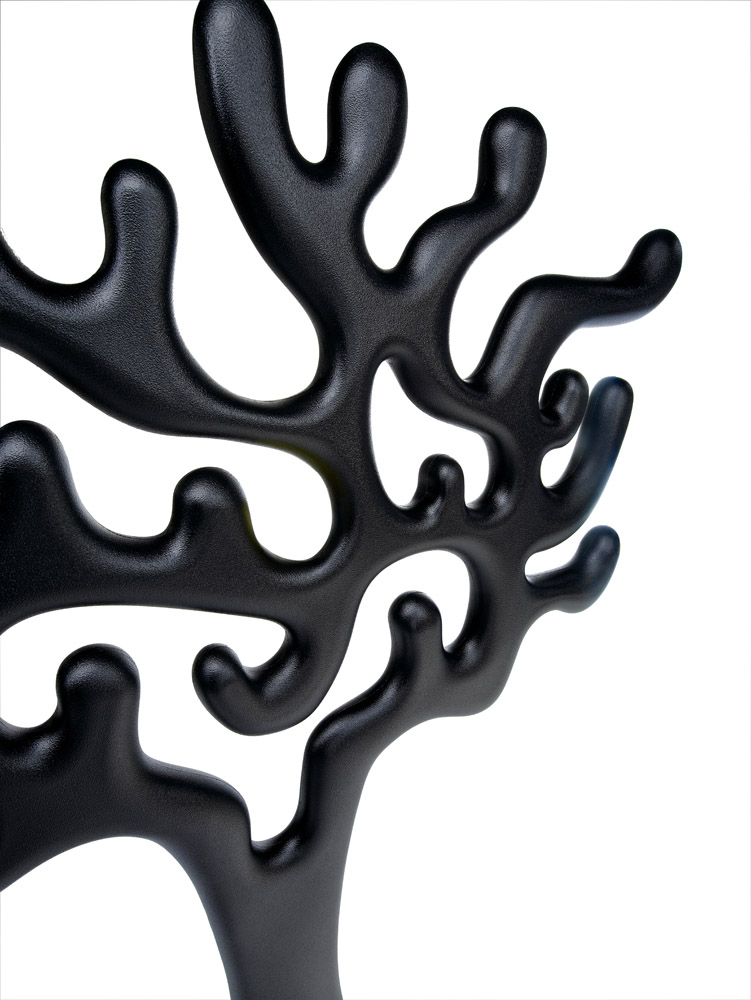
The Tree
M.K. So you try to keep up with the latest technologies and materials?
E.A. Sure! After all, every new step in production technology gives me a new degree of freedom. That’s why I used plastic, because it’s very difficult to make a chair out of wood shaped as a translucent ball!
M.K. You are mainly engaged in furniture. Are there any other objects that you would like to design?
E.A. I am basically more interested in architecture now. When my wife and I were In the United States, we rented a car and drove eight hundred kilometers just to see the famous House over the Waterfall by Frank Lloyd Wright. Or, when the Guggenheim Museum in Bilbao first opened, we went there to see the building. In general, I really like what architects like Frank Gehry, Richard Meyer, Io Ming Pei, Norman Foster, Zaha Hadid. I would also like to design an electric car. But this is a very technically complex object, and I will not be able to cope with it on my own. Besides, it takes a long time to work on.
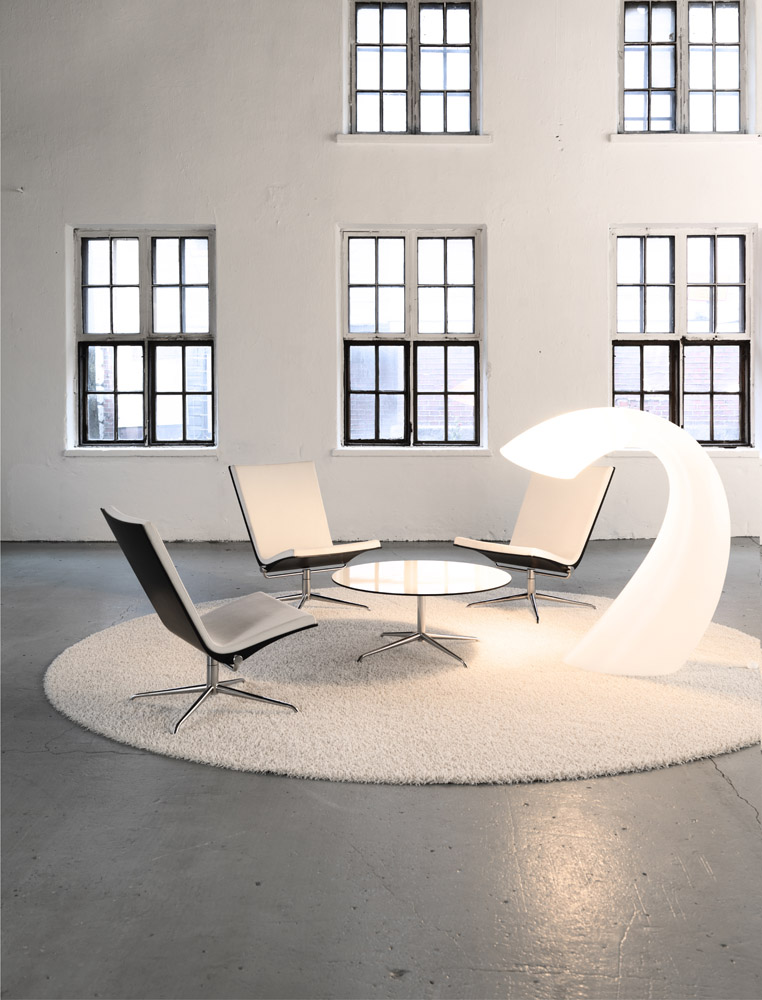
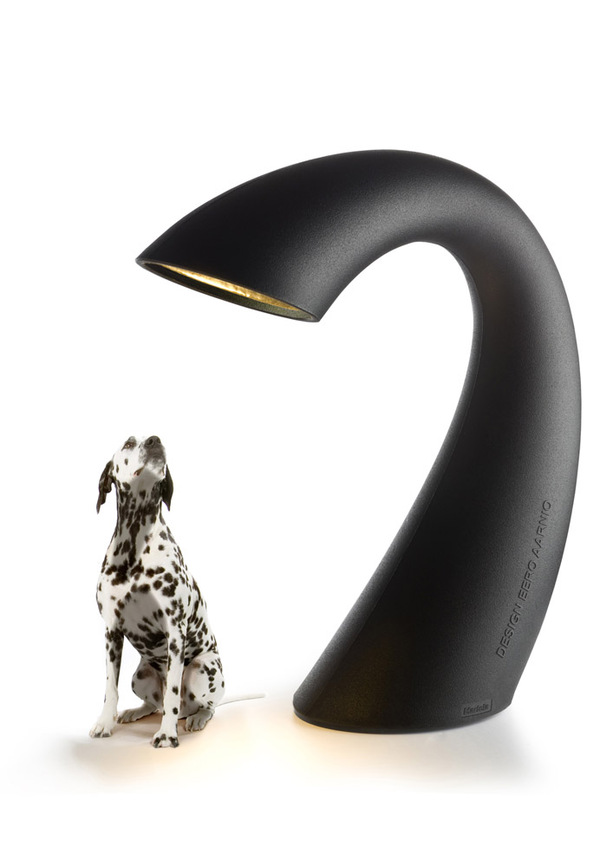
Swan
M.K. Don’t you want to try yourself in architectural design? I am sure if you just put a word out, a fair queue of customers will be lined up!
E.A. I’ve already done this. I designed the house where we now live. I have my workshop in it, and also there’s a bathhouse with a steam room on the lake shore! This spring I couldn’t wait the ice to come off so that I could jump straight into the water of probably four degrees right from the steam room. There was also an order for a whole series of standard individual houses! It was fun to come up with a constructor system for assembling houses of different configurations. But I refused that project. Too large-scale and long-term work.
M.K. Have you ever had to invest in the production of your items yourself?
E.A. Yes, for example, it was the lamp Double Bubble. The manufacturer calculated the cost of the molds, and they turned out to be too expensive. Then I said, ‘OK, I’ll make them myself.’ In a nutshell, I gave them money for molds, and those still belong to me. By the way, this is a good illustration of when it comes to technology. Double Bubble is formed seamless. Technologically, this has become possible quite recently. And we could not put it into circulation for a long time, because traditional incandescent lamps would overheated the plastic. Now, the new energy-saving lamps, which emit very little heat, are put there.
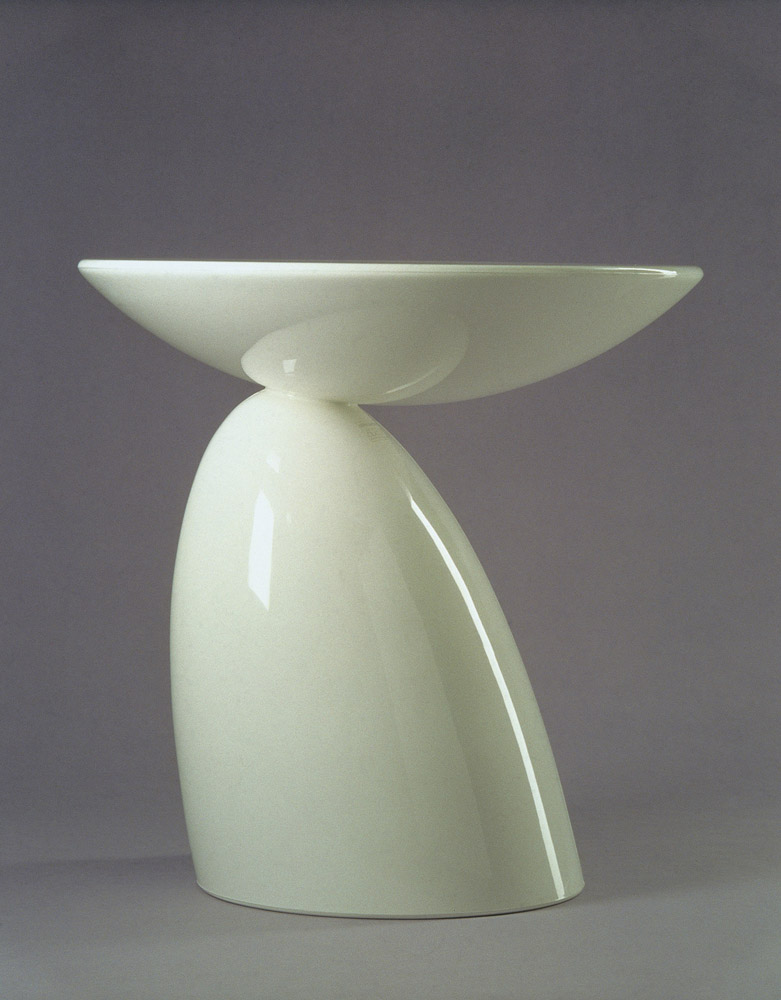
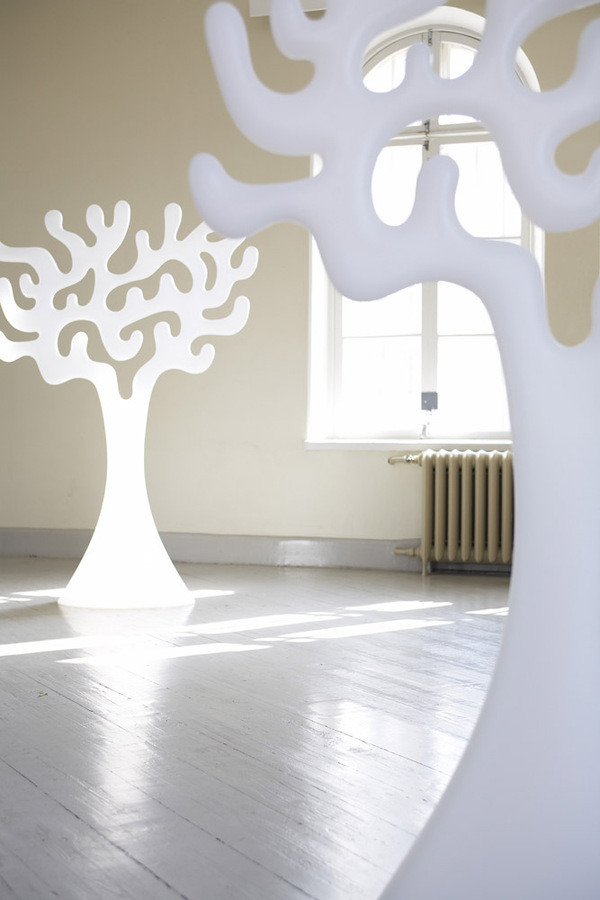
Swan, The Tree
M.K. How long does it usually take, from the first sketch, to the launch the project into circulation?
E.A. There are no rules here. Sometimes, a project just has to wait a suitable production technology to appear, not being implemented for several years. And sometimes it gets to series production right away!
M.K. And in conclusion: you work mainly with Finnish companies, but your items are sold worldwide. Do you consider yourself a Finnish designer?
E.A. No, I’m not really a Finnish designer in the traditional sense. My items are sold, in my opinion, in over sixty countries around the world, so I’m a global designer.