Pub «SEAGULL»
«Seagull» — an innovative gastropub for the boldest of pirates roaming the sea.
I. Applying communication theory in the field of design
Communication theory provides a framework for understanding how messages are encoded, transmitted, and decoded, directly informing design processes where visual and interactive elements act as symbols conveying intent. In design, this mirrors the sender-receiver model from the cybernetic tradition, where designers (senders) craft visuals or interfaces to minimize «noise» like misinterpretation, ensuring audiences (receivers) derive accurate meaning. One could say that, technically, semiotics is science combining design and communication theory.
Designers apply linear models (sender, message, channel, receiver) from communication basics to structure information flow, as seen in creation of posters or logos, where symbols must evoke clear responses and specific meanings. Interactive models incorporate feedback, vital for user experience (like in UX design), allowing later refinement based on user testing, much like the transactional processes discussed in politeness and social exchange theories for relational dynamics.
Semiotics, one of Craig’s seven traditions, treats design elements as signs generating meaning, helping graphic designers build cultural resonance in branding or ads. For example, colors and typography encode certain contexts, somewhat universally understood within a culture and based on tradition, then decoded by audiences, aligning with the emphasis on verbal or non-verbal symbols and interpretive lenses to avoid decoding errors.
Ultimately, communication theory equips designers with the tools to predict audience reactions and embrace engagement, bridging objective research with interpretive approaches for effective outcomes. By applying these lenses, design evolves from mere aesthetics to purposeful dialogue, enhancing clarity across digital and print media.
II. Presentation for general audience
You step away from the city buzz and open the door to a gastro-pub. Lanterns sway on iron chains, a pirate crest on the door calls out: «Board if ye dare… and if ye thirst for adventure.»
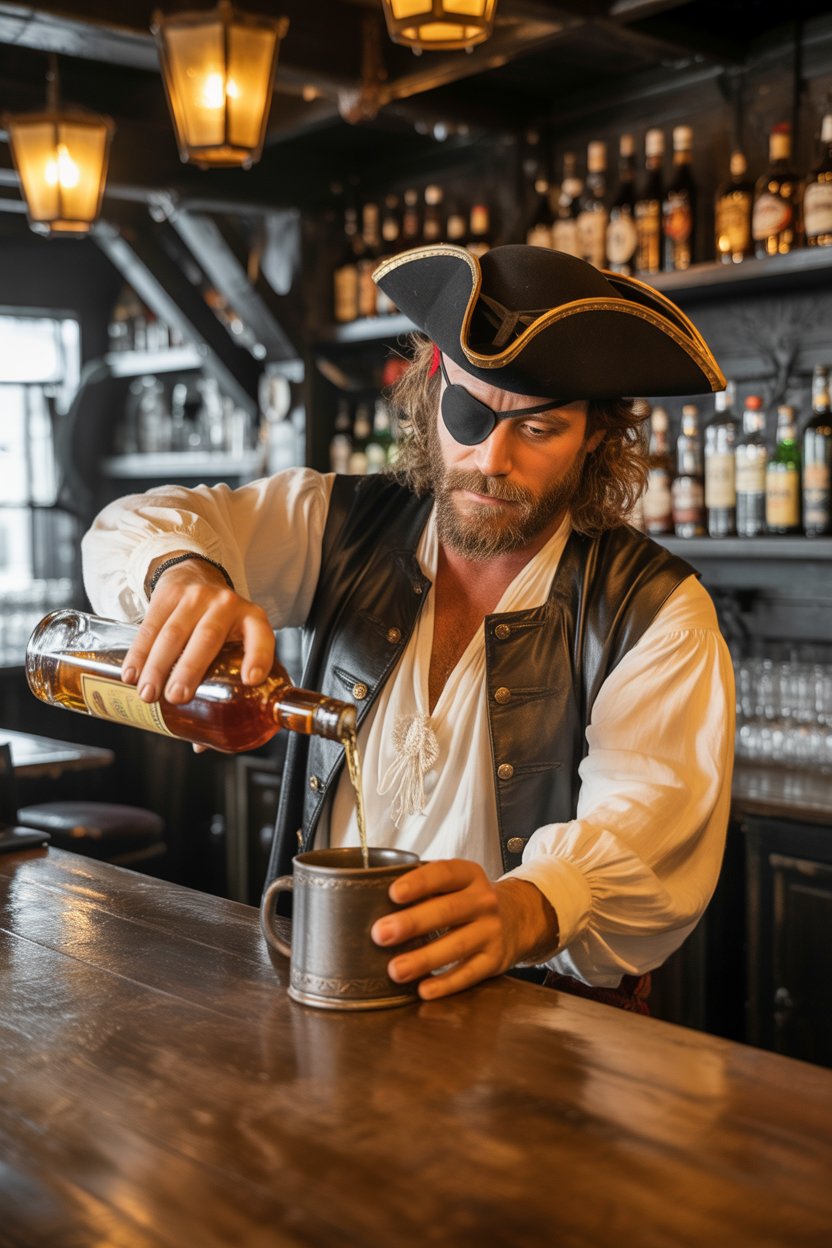
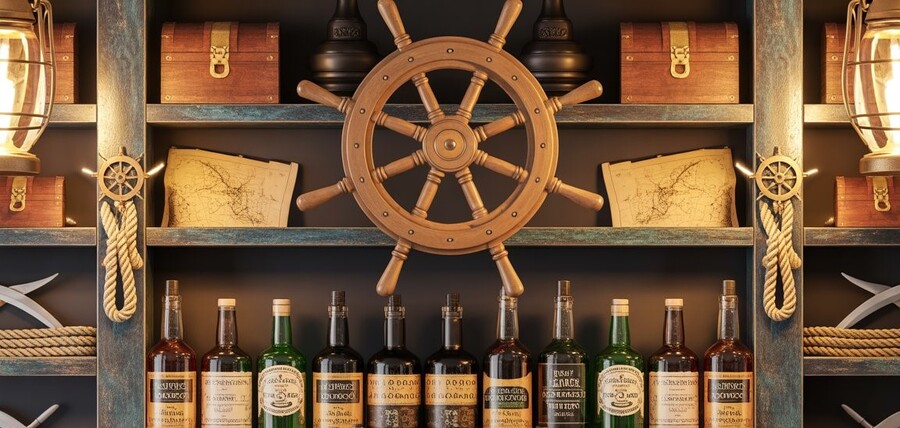
You grab the rough handle—like a ship’s rail—and walk in. Door shuts, city gone. You’re on a pirate ship now, warm but with that real gritty edge. Scarred oak beams overhead, ropes coiled in corners, old maps on the walls showing lost treasures. Lanterns give off a cozy glow. A bartender steps up grinning with a gold tooth: «Welcome aboard, matey! What’s yer poison?» The staff are full-on pirates: they tell wild sea stories, toast with rum, hand you a nickname like «Ironfist.» Suddenly, you’re one of the crew.Sea shanties fill the air—“Drunken Sailor, ” «Blow the Man Down”—that raw beat pulls everyone together. You start singing with folks who feel like old shipmates. The place comes alive. A bartender steps up grinning with a gold tooth: „Welcome aboard, matey! What’s yer poison?“ The staff are full-on pirates: they tell wild sea stories, toast with rum, hand you a nickname like „Ironfist.“ Suddenly, you’re one of the crew.Sea shanties fill the air: „Drunken Sailor, ” „Blow the Man Down”—that raw beat pulls everyone together. You start singing with folks who feel like old shipmates. The place comes alive.
The bar’s loaded with rum: light ones tasting like island breezes, dark and smoky, spiced with clove and nutmeg, aged stuff smooth as can be. Drink it straight from a tankard, or try the crew favorites:
- Blackbeard’s Fury: Dark rum, ginger kick, lime.
- Siren’s Kiss: Spiced rum with coconut and pineapple.
- Grog of the Damned: Classic grog, but better with honey.
Rum’s the real star here. The menu starts with snacks for your drink: sea-salt nuts, spicy pork rinds, cheese and pickled herring. Mains mix old pirate food with modern flavor, the result is historically accurate but actually tasty. Good, simple eats done right. You can try specials of the pub such as:
- House-baked hardtack (flour-water biscuit, toasted crisp) topped with smoked mackerel pâté, pickled herring emulsion, charred spring onions, and dill oil. Pairs with rum—crunchy, briny, nostalgic upgrade.
- Creamy oat porridge slow-cooked with braised salt pork, dried peas, wild celery, and smoked haddock. Modern lift: truffle butter finish, crispy oat crumble topping. Rustic bowl with sourdough. Hearty winter warmer.
- Confited pork belly, roasted turtle (or sustainable monkfish sub), shredded cabbage, mango chutney, olives, hard-boiled quail eggs, in garlic-mustard vinaigrette, fermented chili for heat and microgreens.
Your coat’s hanging with the crew’s, your tankard has your name scratched on it. Staff slap your back, everyone cheers when you down your drink. Laughter everywhere, shanties going strong — you’re sharing stories, making friends. The outside world feels boring. Rum taste stays with you, songs in your head, that nickname stuck. «Fair winds till next time, matey.» You’ll be back.
III. Presentation for professional audience
«Seagull» is a project of passion and creativity. It mirrors our ideals of quality leisure. Modern day need for third spaces sets high standards in our niche, and we can be confident «Seagull» succeeds in providing visitors with best service as well as a unique experience as an immersive, story-driven environment.
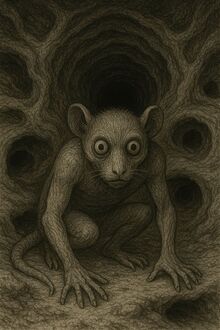
«Seagull» logo
«Seagull» falls intho the category of a gastropub with fine selection of both pub food and alcoholic beverages. Additionally, the establishment with a specific theme guarantees a unique experience in the context of an urban place for social gatherings.
The pub is targeted towards upped-middle class audience; it combines reasonable pricing with high quality food and drinks. «Seagull» positions itself as a place of authenticity and playfullness. Ultimately, the atmosphere invites visitors to participate in the pub’s setting and co-create the experience with each other.
A key element that sets the pub apart is the staff’s active role in bringing the pirate theme to life. Bartenders and servers adopt pirate-inspired speech, gestures, and personalities, creating a lively and immersive atmosphere from the moment guests step inside. Their commitment to playful roleplay adds warmth and humor to the service, making interactions feel more engaging and memorable. At the same time, the team maintains a high standard of professionalism, ensuring that themed performance never comes at the expense of efficiency or guest comfort. By blending character work with attentive service, the staff helps visitors feel part of the story, elevating the overall experience and transforming a simple night out into something more dynamic and enjoyable.
The visual identity is anchored in deep blues and crisp whites, inspired by the endless movement of ocean waves, the tautness of salted sails, and the freshness of open sea air. These primary tones are complemented by warm amber lantern hues, muted weathered reds, and selective black accents, which reference the intimate glow of ship cabins, the patina of aged rum barrels, and the allure of hidden treasure.
Overall, the colours support the key theme of the pub as well as correspond with the common allignment of such institutions towards rich colours that create a cozy and inviting atmosphere for spending the evening.
The selection of drinks at «Seagull» is designed to complement the establishment’s maritime identity while maintaining the high standards expected from an upper-middle-class gastropub. The menu features a curated assortment of craft cocktails, signature rum blends, and premium spirits, each thoughtfully named and styled to reflect the pub’s playful pirate aesthetic.
While the thematic presentation enhances the immersiveness of the experience, the focus remains on quality: expertly balanced flavor profiles, fresh ingredients, and meticulous preparation. Guests can expect both classic options and innovative creations that subtly reference seafaring traditions, ensuring that the beverage program aligns with the pub’s broader promise of authenticity and creativity.
Through this approach, the drinks become not only refreshments but integral elements of the narrative environment, inviting visitors to engage more deeply with the thematic atmosphere and co-create the storyline through their choices.
The interior is designed to draw guests into the feeling of an old seafarer’s world without sacrificing modern comfort. Warm lighting, wooden textures, and nautical details — such as ropes, barrels, maps, and ship-inspired décor — create a cozy, inviting atmosphere that supports the pub’s playful theme.
The space is arranged with care so that every element, from the furniture to the decorative pieces, adds to the sense of story while still being practical for everyday use. Altogether, the interior helps build an environment where visitors can relax, enjoy themselves, and naturally take part in the experience, making the pub a memorable and engaging place to spend time.
IV. Communication theory course as the basis for the presentation
Narrative Paradigm
According to Fisher’s narrative paradigm, humans create meaning through telling stories. This process is embedded in all words’ culture as an instrument for shaping morals and behaviour of generations (Fisher, 1984).
Thus, storytelling serves as an effective approach to the presentation of the brand for the general audience. Rather than reciting appealing aspects of the pub in a straightforward manner, our presentation for general audience relies on an emotionally charged style of writing that can resonate with the potential visitors and give them an impression of the experience they will have in the pub.
This approach establishes a clear message: beyond offering products and a social space, the pub constructs a story and an authentic experience in which visitors can actively participate.
Convergence Theory
«Seagull» creates inevitable emotional investment in accordance with the convergence theory. Bartenders dressed as pirates who as well use specific language when addressing the visitors invite them to participate in a shared fantasy. That saying, the bar represents a distinct world that has its own collection of symbols and meanings.
According to Bormann, who developed Symbolic Convergence Theory, such fantasies are not mere escapes but the very engines of group cohesion. Bormann states that when a group shares such dramatic narratives, they «converge» around a common symbolic ground, arguing that «the sharing of the fantasy creates a common social reality for the people who join in the fantasy». (Bormann, 1972).
In «Seagull», we invite visitors to share the fantasy narrative, thereby transforming a collection of individuals into a cohesive, if temporary, rhetorical community united by the pirate theme, all participating in a consensual roleplay that shapes the whole experience and makes it memorable.
Media logic
The immersive experience is further supported by principles of media logic, which suggest that audiences interpret reality through familiar narrative forms, visual styles, and character types derived from mass media (Altheide & Snow, 1979).
Media logic explains how recognizable media conventions shape perception and understanding. The pirate-themed pub draws on widely established representations of pirates from film, television, and popular culture, enabling visitors to immediately recognize the setting and its narrative cues.
By aligning the experience with these familiar media frames, the pub lowers interpretive barriers and enhances immersion, allowing guests to intuitively engage with the themed environment. Therefore, visitors build their communication strategy, heavily relying on consumed media as a reference for interactions.
V. AI usage
AI usage: For purposes of image creation for this project, ChatGPT and Ideogram were used. In the text, ChatGPT was used to create the examples of items on the menu.
Fisher, W. R. (1984). Narration as a human communication paradigm: The case of public moral argument. Communication Monographs, 51(1), 1–22.
Bormann, E. G. (1972). Fantasy and rhetorical vision: The rhetorical criticism of social reality. Quarterly Journal of Speech, 58(4), 396–407.
Altheide, D. L., & Snow, R. P. (1979). Media logic. Beverly Hills, CA: Sage.
Communication Theory: Bridging Academia and Practice. HSE Smart LMS
ChatGPT for picture generation
Ideogram for picture generation