Communication Theory in the Context of Design
In design and contemporary art, communication is less about delivering a clear message and more about creating conditions for meaning to emerge. Designers work with symbols, images, spaces, and systems that audiences interpret differently depending on context and experience.

Communication theory is useful because it frames design as a relational process. Meaning does not exist inside an object on its own — it is produced through interaction between the work, the audience, and the surrounding culture. Ambiguity and misinterpretation are not problems to eliminate, but tools designers can work with deliberately.
Interpretive approaches to communication are especially relevant to contemporary design practice. Rather than searching for universal rules, they focus on how people make sense of things in real situations. This allows designers to think in terms of cultural codes, shared references, and emotional response.
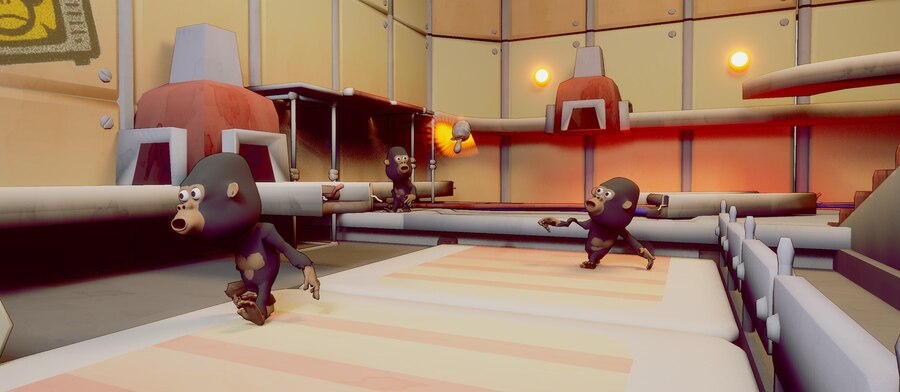
Gorilla Warfare gameplay footage
In game design and branding, communication becomes continuous. Games respond to players, communities react to games, and meaning shifts over time. Communication theory helps structure this process, making it possible to design not just visuals or mechanics, but relationships between people, systems, and symbols.
Gorilla Warfare for a general audience
Gorilla Warfare is a stupidly fun co-op multiplayer game about monkeys, grenades, and everything going wrong in the best possible way.
You and your friends play as cartoon gorillas thrown into colorful arenas where physics rules everything. You run, jump, punch, throw grenades, miss completely, and accidentally knock your teammate off a platform. Winning is great, but the real goal is chaos, teamwork, and laughing at the unexpected.
Communication Goal Create immediate emotional alignment through play, not persuasion.
fan-art for the game, by @baadartyourartisbaad
«This is a space for chaos, laughter, and shared absurdity.»
The game is framed as: A playground, not a contest A source of stories, not rankingsGorilla Warfare gameplay footage
Encoding Strategy (Shannon–Weaver Model) Simple language Visual chaos and exaggerated physics Minimal rules, high interpretive freedom
→ Reduces cognitive load and allows players to decode meaning intuitively.
Emotional Appeal (Affective Communication)
Humor, surprise, and unpredictability Failure is reframed as entertainment Loss becomes a narrative event, not a negative outcome


Plushy product photography based on in-game models, Copliot
Audience Positioning (Identity Theory)
Players are addressed as: Participants, not consumers Members of an in-group («monkes», chaos players)
Shared meaning is created quickly, without explanation or instruction.
Brand presentation for a professional audience
Communication Goal Signal intentionality, authorship, and design philosophy to peers.
Gorilla Warfare gameplay footage
Chaos is not noise — it is designed signal.
Participatory Communication Model is our model for communication, it’s: Horizontal, not hierarchical Developers and players co-construct meaning through interaction
Design as Communication (Ludonarrative Theory) Game systems communicate values: Imbalance → unpredictability Physics glitches → emergent storytelling Mechanics function as messages about play, not efficiency
Feedback Handling (Dialogic Communication) Player feedback is acknowledged emotionally, not corrected technically Ambiguity is preserved to protect interpretive openness
Gorilla Warfare gameplay footage
Professional Positioning (Ethos Construction) Developer voice is reflective, playful, and self-aware Credibility is built through clarity of philosophy, not claims of polish
Strategic Outcome A strong, differentiated communicative identity within the indie and experimental game development field.
How communication theory informed the brand and presentations
Interpretive approach The project is based on the idea that meaning is not fixed, but created through interaction. Gorilla Warfare does not communicate through story or explanation, but through situations. Players construct meaning through play, coordination, failure, and shared reactions.
Semiotics and visual language Visual design acts as a primary communication channel. Bright colors, exaggerated characters, and textured surfaces signal tone and intent before any interaction begins. These signs tell players how to approach the game: playfully, socially, and without fear of failure.
Socio-cultural communication The brand assumes communication happens between people, not just between product and user. Memes, clips, and merch function as shared symbols that build community and reinforce belonging. Meaning is produced collectively and evolves over time.